WELCOME TO HYDRAULIC INSIGHT !!!

Types of Hydraulic Pressure in Hydraulic Systems

Contents

Types of Hydraulic Pressure in Hydraulic Systems

Hydraulic pressure is one of the fundamental principles that makes modern industry and machinery possible. From the brakes in a car to the massive excavators on construction sites, hydraulic systems rely on the controlled application of hydraulic pressure to transmit power efficiently. This concept is rooted in the idea that a fluid, when placed under pressure, can generate force and motion that is both powerful and precise.

At its core, hydraulic pressure is defined as the force exerted by a fluid per unit area within a closed system. Unlike mechanical systems that depend on gears or pulleys, or pneumatic systems that use compressed air, hydraulic systems utilize incompressible liquids to transfer energy. The unique advantage of hydraulic pressure is its ability to multiply force, allowing relatively small pumps or actuators to produce enormous lifting and pushing power.

The importance of hydraulic pressure cannot be overstated. It drives innovation in manufacturing, ensures safety in aviation, delivers efficiency in oil and gas operations, and provides reliability in heavy equipment used for construction and agriculture. Because fluids can transmit pressure uniformly in all directions, engineers and designers can build compact systems that perform tasks impossible for other forms of power transmission.

This article will explore hydraulic pressure in depth, beginning with the fundamental principles that govern it, moving through its measurement, types, and the components that rely on it, and finally looking at real-world applications, challenges, safety considerations, and future trends. Whether you are an engineer, a technician, a student, or simply someone interested in how hydraulic systems work, understanding hydraulic pressure provides valuable insight into the forces that power our modern world.


1. Basics of Hydraulic Pressure

Hydraulic pressure is the force that a fluid exerts inside a confined hydraulic system. It is the core principle that enables hydraulic machines—such as excavators, presses, lifts, and braking systems—to generate high power using relatively compact components. Understanding the basics of hydraulic pressure helps explain why hydraulic systems are so efficient and widely used in modern engineering.

Basics of Hydraulic Pressure

1. What Is Hydraulic Pressure?

Hydraulic pressure is defined as the amount of force applied to a fluid divided by the surface area over which the force is distributed. The formula is:

P=F/A

Where:

  • P = hydraulic pressure

  • F = applied force

  • A = the area receiving that force

Because liquids are nearly incompressible, the pressure applied at one point is transmitted equally throughout the entire fluid.

2. Pascal’s Law — The Foundation of Hydraulics

Hydraulic pressure works based on Pascal’s Law, which states:

“Pressure applied to a confined fluid is transmitted undiminished in all directions.”

This means that a small force applied in a hydraulic system can create a much larger force elsewhere—one of the major advantages of hydraulics.

3. How Hydraulic Pressure Is Created

Hydraulic pressure is generated by forcing fluid into a closed system using a hydraulic pump. The pump creates fluid flow, and pressure builds as the fluid encounters resistance from valves, loads, or actuators.

Important components influencing pressure include:

  • Pumps – move the fluid

  • Valves – regulate or limit pressure

  • Actuators (cylinders/motors) – convert pressure into motion

4. Units Used to Measure Hydraulic Pressure

Common units include:

  • bar (widely used in industry)

  • psi (pounds per square inch, used in the U.S.)

  • Pa, kPa, MPa (international SI units)

  • kg/cm² (common in Asia)

Example conversion:

  • 1 bar = 14.5 psi

  • 1 MPa = 10 bar = 145 psi

5. Why Hydraulic Pressure Is So Powerful

Several reasons make hydraulic pressure ideal for high-force applications:

  • Liquids are incompressible → stable force transmission

  • Systems can multiply force → small input yields huge output

  • Pressure remains constant regardless of system shape or size

  • Movements are smooth and precise

6. Everyday Examples of Hydraulic Pressure

Hydraulic pressure is used in many familiar systems:

  • Car braking systems

  • Car lifts in repair shops

  • Excavators and cranes

  • Aircraft landing gear

  • Hydraulic jacks and presses

These examples show how hydraulic pressure makes heavy lifting and precision control possible across industries.


2. Importance of Understanding Hydraulic Pressure

Understanding hydraulic pressure is essential for anyone who designs, operates, or maintains hydraulic systems. Because hydraulic pressure controls the force, movement, and safety of fluid-power equipment, even a small mistake in pressure management can lead to performance losses, equipment damage, or serious safety risks. A solid understanding of hydraulic pressure ensures reliability, efficiency, and safe operation across all industries.

1. Ensures Safe Operation

Hydraulic systems often operate at extremely high pressures—sometimes hundreds or thousands of psi.
Knowing how hydraulic pressure behaves helps prevent:

  • Over-pressurization

  • Hose or fitting bursts

  • Fluid injection injuries

  • Mechanical failures

A proper understanding allows technicians to use correct components, settings, and PPE to reduce workplace accidents.

2. Improves System Performance and Efficiency

Hydraulic pressure directly influences how much force a system can deliver.
A deeper understanding helps engineers:

  • Set correct pressure levels for each application

  • Avoid unnecessary energy consumption

  • Reduce heat generation and pressure loss

  • Improve actuator speed and response time

Efficient management of hydraulic pressure leads to better productivity and lower operating costs.

3. Helps Diagnose and Prevent Problems

Most hydraulic issues begin as pressure-related symptoms.
Examples include:

  • Slow cylinder movement → low hydraulic pressure

  • Excessive noise → cavitation from improper pressure

  • Overheating → pressure losses causing friction

  • Jerky motion → inconsistent hydraulic pressure

Understanding pressure patterns helps technicians quickly identify issues and prevent failures.

4. Supports Proper Component Selection

Every hydraulic component—pumps, hoses, valves, fittings, cylinders—has specific pressure ratings.
Understanding hydraulic pressure ensures you choose components that:

  • Match system pressure requirements

  • Withstand dynamic and peak loads

  • Maintain long service life

  • Meet safety standards

Incorrect pressure rating is one of the most common causes of system failure.

5. Enhances System Design and Innovation

Engineers designing modern hydraulic systems must understand how hydraulic pressure affects:

  • Force generation

  • Load handling

  • Energy efficiency

  • Temperature behavior

  • Fluid compatibility

This knowledge enables the design of advanced hydraulic machinery, hybrid electro-hydraulic systems, and automated pressure-controlled equipment.

6. Ensures Regulatory and Industry Compliance

Many industries have strict safety standards for hydraulic pressure, such as:

  • Construction machinery guidelines

  • Aviation hydraulic system regulations

  • Oil & gas pressure-control requirements

  • Industrial machinery directives

A strong understanding of hydraulic pressure helps companies meet compliance, avoid fines, and protect operators.


3. How Hydraulic Pressure Works

Hydraulic pressure works on a simple but powerful principle: when force is applied to an incompressible fluid in a closed system, the fluid transmits that pressure evenly in all directions. This allows small inputs to produce large outputs, making hydraulics one of the most efficient methods of power transmission.

3.1 Transmission of Pressure in Incompressible Fluids

Unlike gases, liquids cannot be compressed significantly. When a hydraulic pump applies force to the fluid, the resulting hydraulic pressure moves instantly throughout the system. This ensures that actuators, cylinders, and motors all respond uniformly to the applied pressure, regardless of their position in the circuit.

  • Example: When you press the brake pedal in a car, the pressure you apply is distributed evenly through the brake fluid, activating all four brakes simultaneously.

3.2 Role of Hydraulic Pumps in Generating Pressure

Hydraulic pumps are the heart of the system, responsible for creating the flow of fluid that generates hydraulic pressure. While pumps do not technically create pressure (they move fluid), resistance within the system—such as valves or loads—causes pressure to build.

  • Gear pumps: simple, durable, and common in low to medium pressure systems.

  • Vane pumps: used in applications requiring smoother flow and moderate pressure.

  • Piston pumps: ideal for high-pressure systems like construction machinery.

The pump ensures a steady supply of hydraulic fluid, and the system design determines the level of hydraulic pressure produced.

3.3 Valves and Their Role in Controlling Hydraulic Pressure

Valves regulate, limit, and direct hydraulic pressure throughout the system. Common types include:

  • Relief valves – prevent dangerous over-pressurization by releasing excess pressure.

  • Reducing valves – lower hydraulic pressure in specific parts of the system.

  • Directional control valves – direct pressurized fluid to actuators or return lines.

By precisely managing hydraulic pressure, valves allow complex machines to perform controlled movements safely.

3.4 Pressure vs. Flow: Understanding the Difference

A common misconception is that flow and hydraulic pressure are the same. In reality:

  • Flow = the volume of fluid moved per unit time (liters/min or gallons/min).

  • Hydraulic pressure = the resistance to that flow caused by load or restrictions (measured in bar, psi, or Pa).

Together, they determine the power of a hydraulic system:

Power=Pressure×Flow

  • If flow increases while pressure stays the same, speed increases.

  • If pressure increases while flow stays the same, force increases.

This balance is critical in designing efficient hydraulic systems.

3.5 Examples of Hydraulic Pressure in Action

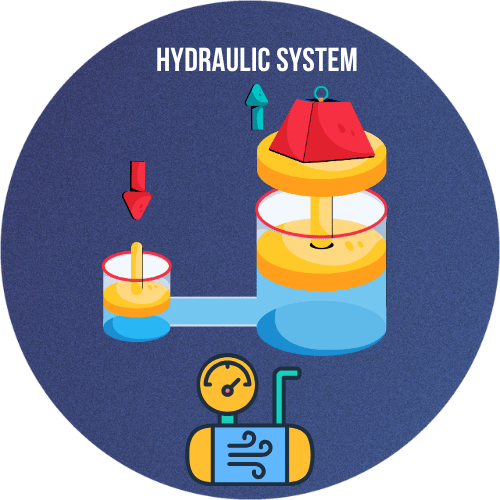
  • Hydraulic presses: Small pistons apply force to generate high pressure, which is then transferred to large pistons to crush or mold materials.

  • Excavators: Hydraulic pressure powers cylinders that control the boom, arm, and bucket.

  • Aircraft landing gear: Hydraulic pressure ensures smooth extension and retraction under heavy loads.

These examples show how hydraulic pressure transforms small manual or pump-driven efforts into large, controlled forces.


4. Units and Measurement of Hydraulic Pressure

Hydraulic pressure must be accurately measured and expressed in standard units to ensure systems operate safely and efficiently. Different industries and regions may use different units, but the principle remains the same: pressure is the force exerted per unit area.

4.1 Common Units of Hydraulic Pressure

The most widely used units of hydraulic pressure include:

  • Pascal (Pa) – SI unit of pressure

    • 1 Pascal = 1 Newton per square meter (N/m²)

    • Hydraulic systems typically use kilopascals (kPa) or megapascals (MPa), since 1 Pa is very small.

  • Bar – common in Europe and industrial settings

    • 1 bar = 100,000 Pa (approximately atmospheric pressure at sea level).

  • Pounds per square inch (psi) – widely used in North America

    • 1 psi = 6,894.76 Pa.

  • Kilogram per square centimeter (kg/cm²) – often seen in Asia

    • 1 kg/cm² ≈ 0.98 bar ≈ 14.22 psi.

4.2 Conversion Between Units

Because hydraulic equipment is used worldwide, converting pressure values between units is essential. Some common conversions:

  • 1 bar = 14.5 psi = 100 kPa

  • 1 MPa = 10 bar = 145 psi

  • 1 kg/cm² = 0.98 bar = 14.22 psi

Example: If a hydraulic press operates at 200 bar, that is equivalent to:

  • 2,900 psi

  • 20,000 kPa

  • ~204 kg/cm²

4.3 Tools for Measuring Hydraulic Pressure

Measuring hydraulic pressure requires specialized instruments designed for accuracy and safety.

  1. Analog Pressure Gauges

    • Most common tool

    • Uses a Bourdon tube that flexes under pressure

    • Displays readings in psi, bar, or both

    • Durable but can be less precise at very high pressures.

  2. Digital Pressure Gauges

    • Provide more accurate readings

    • Often include data logging and multi-unit conversion

    • Useful for maintenance and troubleshooting.

  3. Pressure Transducers and Sensors

    • Convert hydraulic pressure into electrical signals

    • Can be integrated into monitoring systems

    • Allow real-time tracking in automated equipment.

  4. Hydraulic Pressure Test Kits

    • Portable sets used by technicians

    • Include gauges, hoses, and adaptors for connecting to hydraulic circuits

    • Allow quick diagnosis of pressure issues.

4.4 Practical Examples of Measuring Hydraulic Pressure

  • Construction equipment: Mechanics connect gauges to hydraulic lines to confirm that the system maintains rated pressure (e.g., 250 bar in excavators).

  • Aircraft maintenance: Digital sensors track hydraulic pressure in landing gear systems, ensuring safe operation before takeoff.

  • Industrial presses: Operators monitor hydraulic pressure gauges to avoid exceeding maximum allowable limits that could damage the press or mold.

4.5 Importance of Accurate Measurement

Accurate measurement of hydraulic pressure ensures:

  • Safety – preventing catastrophic failures due to over-pressurization.

  • Performance – verifying that pumps and actuators deliver correct output.

  • Efficiency – detecting leaks or blockages early through abnormal pressure drops.

  • Compliance – meeting industry standards and regulations.


5. Types of Hydraulic Pressure in Systems

Hydraulic systems operate under different types of hydraulic pressure depending on design, load, and application. Understanding these types helps engineers, operators, and technicians maintain efficiency and safety in fluid power systems.

5.1 Static Hydraulic Pressure

  • Definition: The pressure exerted by a fluid at rest in a closed system.

  • Occurs when the pump is off but the system is still filled with fluid.

  • Example: A hydraulic jack holding a load without movement still exerts static pressure on its seals and components.

  • Importance: Determines the baseline load on components even when the system is idle.

5.2 Dynamic Hydraulic Pressure

  • Definition: The pressure measured when fluid is in motion.

  • Dynamic pressure fluctuates as pumps, actuators, and valves operate.

  • Example: Excavator arms or hydraulic presses experience dynamic changes when extending or retracting cylinders.

  • Impact: More demanding on system components due to constant pressure variation.

5.3 Working (Operating) Hydraulic Pressure

  • Definition: The normal pressure range within which a hydraulic system is designed to function.

  • Typically expressed as rated pressure by the equipment manufacturer.

  • Example: Many industrial hydraulic systems operate between 140–250 bar (2,000–3,600 psi).

  • Key role: Ensures that pumps, hoses, valves, and cylinders operate within safe limits.

5.4 Maximum Allowable Hydraulic Pressure

  • Definition: The highest pressure a system or component can safely withstand during normal operation.

  • Typically higher than working pressure to provide a safety margin.

  • Example: A pump rated for 250 bar working pressure may have a maximum allowable pressure of 280–300 bar.

5.5 Burst Pressure

  • Definition: The pressure level at which a component (hose, fitting, or cylinder) fails catastrophically.

  • Usually several times higher than the working pressure.

  • Example: A hose rated for 250 bar may have a burst pressure rating of 1,000 bar.

  • Note: Operating anywhere near burst pressure is extremely dangerous.

5.6 Pressure Drop

  • Definition: The reduction in hydraulic pressure as fluid flows through hoses, pipes, filters, and valves.

  • Caused by friction, restrictions, or leaks.

  • Example: A system generating 200 bar at the pump may deliver only 190 bar to the actuator due to pressure losses in long hoses.

  • Significance: Excessive pressure drop reduces efficiency and increases heat buildup.

5.7 Differential Hydraulic Pressure

  • Definition: The difference between two pressure points in a system.

  • Used to measure filter condition, valve function, or actuator load.

  • Example: If the inlet pressure of a filter is 210 bar and the outlet is 205 bar, the differential pressure is 5 bar.

  • Application: Monitoring differential hydraulic pressure helps in preventive maintenance by indicating clogging or restrictions.


6. Hydraulic Pressure in Equipment and Components

Hydraulic pressure is the driving force behind all hydraulic components. Each piece of equipment in a hydraulic system is designed to handle specific pressure levels, ensuring performance, safety, and durability.

6.1 Hydraulic Pumps

  • Function: Pumps generate fluid flow that, under resistance, creates hydraulic pressure.

  • Types of pumps and their pressure ranges:

    • Gear pumps: Simple, reliable, usually up to 210 bar (3,000 psi).

    • Vane pumps: Smoother flow, medium pressures up to 140–175 bar.

    • Axial piston pumps: High efficiency, capable of 350 bar (5,000 psi) or more.

    • Radial piston pumps: Very high-pressure systems, exceeding 700 bar (10,000 psi).

  • Key point: Pumps do not directly create hydraulic pressure—they move fluid, and system resistance builds the pressure.

6.2 Hydraulic Cylinders

  • Role: Convert hydraulic pressure into linear force and motion.

  • Working principle: Pressure applied to the piston surface creates force:

    F=P×A

    (where F = force, P = pressure, A = piston area).

  • Example: A cylinder with a piston area of 50 cm² and pressure of 200 bar generates 100 kN of force.

  • Application: Widely used in construction machinery, lifts, and presses.

6.3 Hydraulic Motors

  • Function: Convert hydraulic pressure and flow into rotary motion.

  • Types:

    • Gear motors – simple, moderate pressure.

    • Vane motors – smooth operation, medium pressure.

    • Piston motors – high torque, high pressure.

  • Applications: Winches, mixers, conveyor drives.

6.4 Hydraulic Accumulators

  • Purpose: Store hydraulic pressure for later use.

  • How they work: Use compressed gas (nitrogen) and fluid separated by a bladder, piston, or diaphragm.

  • Benefits:

    • Absorb pressure spikes.

    • Maintain pressure when pumps are off.

    • Improve system efficiency.

6.5 Hydraulic Valves

  • Pressure Relief Valves: Protect systems from over-pressurization by opening at preset limits.

  • Reducing Valves: Maintain lower hydraulic pressure in selected branches.

  • Sequence Valves: Ensure operations happen in a set order by controlling pressure between actuators.

  • Check Valves: Allow flow in one direction, preventing reverse pressure buildup.

6.6 Hydraulic Hoses and Fittings

  • Hoses: Must be rated for specific working and burst pressures.

    • Example: A hose may be rated for 250 bar working pressure with a 1,000 bar burst rating.

  • Fittings: Connect hoses and components, must be leak-proof under pressure.

  • Failure risks: Burst hoses from exceeding pressure limits can cause accidents, downtime, and environmental hazards.

6.7 Filtration and Pressure

  • Filters play a role in maintaining proper hydraulic pressure by preventing blockages.

  • Differential pressure across a filter indicates clogging.

  • Regular filter maintenance ensures stable system pressure and protects components.


7. Industrial Applications of Hydraulic Pressure

Hydraulic pressure is essential in countless industries where precise, reliable, and powerful force transmission is required. Its ability to multiply force and operate in compact spaces makes it indispensable in modern engineering and daily operations.

7.1 Automotive Industry

  • Braking systems: Hydraulic pressure in brake fluid multiplies the force applied to the pedal, clamping brake pads onto rotors.

  • Power steering: Hydraulic pressure assists drivers in turning the wheels with minimal effort.

  • Suspension systems: Advanced vehicles use hydraulically controlled dampers for stability and comfort.

7.2 Construction and Heavy Equipment

  • Excavators and loaders: Hydraulic cylinders use hydraulic pressure to lift, dig, and transport heavy loads.

  • Cranes: Hydraulic motors and winches allow precise lifting and rotation under enormous loads.

  • Bulldozers and graders: Hydraulic pressure controls blades for leveling and earthmoving tasks.

7.3 Manufacturing Industry

  • Hydraulic presses: Use controlled hydraulic pressure to mold, stamp, or cut metal and plastic parts.

  • Injection molding machines: Depend on hydraulic pressure to inject molten material into molds with precision.

  • Machine tools: Lathes, milling machines, and grinders often use hydraulic pressure for clamping and feed mechanisms.

7.4 Aviation and Aerospace

  • Landing gear systems: Hydraulic pressure ensures safe extension and retraction under high loads.

  • Flight control surfaces: Rudders, flaps, and ailerons are actuated by hydraulic systems for stability and maneuverability.

  • Cargo doors and ramps: Operated through high-pressure hydraulics for reliability and safety.

7.5 Marine and Offshore Applications

  • Ship steering systems: Hydraulic pressure is used to control rudders on large vessels.

  • Winches and cranes: Hydraulic systems manage heavy lifting operations on ships and oil rigs.

  • Subsea operations: Hydraulic pressure powers remotely operated vehicles (ROVs) for underwater exploration and maintenance.

7.6 Oil & Gas and Petrochemical Industries

  • Blowout preventers (BOPs): Hydraulic pressure ensures rapid shutoff during drilling emergencies.

  • Pipeline valves: Operated by hydraulics to handle high-pressure oil and gas transport.

  • Refinery equipment: Uses hydraulic pressure in presses, actuators, and safety devices.

7.7 Agriculture and Forestry

  • Tractors: Hydraulic pressure powers lifting arms, attachments, and steering systems.

  • Harvesting machines: Use hydraulics for cutting, sorting, and transporting crops.

  • Forestry equipment: Hydraulic pressure drives log splitters, loaders, and tree harvesters.

7.8 Medical and Specialized Applications

  • Hospital beds and surgical tables: Hydraulic pressure allows smooth adjustment.

  • Hydraulic stretchers: Provide stability and safety in emergency medical care.

  • Robotics and prosthetics: Specialized hydraulic systems offer controlled, lifelike movement.


8. Factors Affecting Hydraulic Pressure

Hydraulic systems are designed to deliver stable and reliable hydraulic pressure, but in real-world applications, several factors can influence how pressure is generated, transmitted, and maintained. Understanding these factors is essential for ensuring efficiency, safety, and long equipment life.

8.1 Fluid Type and Viscosity

  • Viscosity is the fluid’s resistance to flow.

  • If the fluid is too viscous, it causes excessive friction and energy loss, raising system temperature.

  • If it is too thin, it may not build sufficient hydraulic pressure or lubricate components properly.

  • Different industries use specialized fluids: mineral oils, synthetic blends, or water-based fluids.

8.2 Temperature and Thermal Expansion

  • Temperature changes affect fluid viscosity.

    • High temperatures reduce viscosity, making it harder to maintain hydraulic pressure.

    • Low temperatures increase viscosity, slowing response time and stressing pumps.

  • Thermal expansion of fluid and components can create pressure fluctuations if not properly managed.

8.3 Hose Diameter, Length, and Restrictions

  • Pressure drops occur as fluid flows through hoses and pipes.

  • Smaller diameters and longer hoses create more resistance, reducing available hydraulic pressure at the actuator.

  • Sharp bends, fittings, and restrictions also contribute to losses.

8.4 Pump Efficiency and Speed

  • Pumps are responsible for generating flow that creates hydraulic pressure under resistance.

  • Worn or inefficient pumps fail to maintain rated pressure.

  • Pump speed also influences pressure output—too slow reduces pressure, while too fast can cause cavitation.

8.5 System Leakage

  • Internal leakage: Occurs inside pumps, cylinders, or valves, reducing effective hydraulic pressure.

  • External leakage: Visible fluid leaks that reduce system efficiency and pose safety risks.

  • Even small leaks can cause significant pressure loss over time.

8.6 Contamination and Wear

  • Dirt, debris, and water in hydraulic fluid damage seals and valves.

  • Contamination increases friction, causes pressure loss, and may lead to sudden equipment failure.

  • Regular filtration and fluid analysis are critical for stable hydraulic pressure.

8.7 Load Variations

  • Hydraulic pressure adapts to the load being moved.

  • Heavier loads require higher hydraulic pressure.

  • Systems must be designed with safety margins to handle peak loads without exceeding maximum allowable pressure.

8.8 Altitude and Environmental Conditions

  • In aerospace and offshore applications, environmental pressure changes can influence system performance.

  • High-altitude conditions may alter pump efficiency, while extreme humidity can increase contamination risks.


9. Advantages of Using Hydraulic Pressure

Hydraulic pressure is widely adopted across industries because it offers unique benefits compared to other power transmission methods such as mechanical gears or pneumatic systems. Its ability to generate high force with compact components makes it the backbone of many critical applications.

9.1 High Power-to-Size Ratio

  • Hydraulic systems can deliver enormous force from relatively small actuators and cylinders.

  • Example: A compact hydraulic jack using hydraulic pressure can lift a multi-ton vehicle, which would be impossible with purely mechanical tools of the same size.

9.2 Precise Control of Force and Motion

  • Hydraulic pressure allows smooth, variable control of speed and force.

  • Operators can make fine adjustments, making hydraulics ideal for construction equipment, aircraft systems, and surgical machinery.

  • Unlike pneumatics, which can be jerky due to air compressibility, hydraulic pressure ensures stable, controlled movement.

9.3 Reliability and Safety

  • Well-maintained hydraulic systems can run continuously under heavy loads.

  • Components are built with safety features such as relief valves that protect against over-pressurization.

  • Hydraulic pressure is unaffected by electrical power interruptions, making it reliable for emergency systems like aircraft landing gear.

9.4 Smooth and Consistent Power Transmission

  • Since liquids are nearly incompressible, hydraulic pressure transmits force uniformly in all directions.

  • This results in smooth operations with minimal energy loss compared to other systems.

  • Example: Elevators powered by hydraulic pressure provide seamless lifting without sudden movements.

9.5 Flexibility and Versatility

  • Hydraulic pressure can be adapted to thousands of applications—from small hospital beds to massive offshore drilling rigs.

  • It is equally effective in high-precision, low-speed operations and high-force, heavy-duty tasks.

9.6 Long Service Life of Components

  • With proper maintenance, hydraulic pumps, valves, and actuators can last for decades.

  • Hydraulic pressure does not cause wear in the same way as mechanical gear transmission, reducing component fatigue.

9.7 Energy Storage Capability

  • Through accumulators, hydraulic systems can store hydraulic pressure and release it instantly when needed.

  • This improves energy efficiency and provides emergency backup power.


10. Disadvantages and Challenges of Hydraulic Pressure

While hydraulic pressure delivers tremendous advantages, it also presents certain drawbacks and operational challenges. These must be managed carefully to ensure systems remain safe, efficient, and cost-effective.

10.1 Heat Generation and Energy Loss

  • Hydraulic systems generate heat due to friction within pumps, valves, and hoses.

  • Excessive heat reduces fluid viscosity, leading to unstable hydraulic pressure.

  • Energy losses in the form of heat lower system efficiency.

  • Cooling systems or heat exchangers are often required to maintain safe operating temperatures.

10.2 Fluid Leaks

  • One of the most common challenges in hydraulics.

  • External leaks can cause:

    • Safety hazards (slippery surfaces, fire risks with flammable fluids).

    • Environmental contamination.

    • Loss of hydraulic pressure and reduced efficiency.

  • Internal leaks within pumps, valves, or cylinders result in pressure loss, slower response, and higher maintenance costs.

10.3 Maintenance Requirements

  • Hydraulic systems demand regular inspection and servicing to keep hydraulic pressure within safe limits.

  • Components such as seals, hoses, and filters wear out over time.

  • Neglecting maintenance leads to performance degradation, increased downtime, and unexpected failures.

10.4 Sensitivity to Contamination

  • Hydraulic pressure stability relies on clean fluid.

  • Dust, dirt, and water contamination can damage pumps, clog valves, and cause pressure fluctuations.

  • Filtration systems must be carefully maintained, and fluid quality monitored.

10.5 Noise and Vibration

  • High-pressure pumps and valves can produce significant noise.

  • Vibrations in hoses and fittings caused by fluctuating hydraulic pressure reduce component life.

  • In sensitive environments (e.g., hospitals or labs), noise suppression is necessary.

10.6 Cost Considerations

  • Initial setup costs of hydraulic systems are higher than simple mechanical or pneumatic systems.

  • Long-term costs include:

    • Hydraulic fluid replacement.

    • Maintenance of pumps, valves, and seals.

    • Specialized technicians to handle troubleshooting.

10.7 Environmental Concerns

  • Hydraulic fluids can be hazardous if spilled.

  • Leaks of oil-based fluids may harm ecosystems and require costly cleanup.

  • Industries are shifting toward eco-friendly, biodegradable hydraulic fluids to minimize risks.


11. Safety Considerations with Hydraulic Pressure

Hydraulic systems operate under extremely high pressures, often exceeding hundreds of bars. Improper handling or equipment failure can cause serious injuries, equipment damage, or even fatalities. Understanding safety considerations in managing hydraulic pressure is essential for technicians, engineers, and operators.

11.1 Dangers of Over-Pressurization

  • Exceeding rated limits can cause hoses, fittings, or cylinders to burst.

  • Sudden release of hydraulic pressure can eject fluid at high velocity, creating a “fluid injection hazard” capable of penetrating skin.

  • Safety devices like relief valves are critical to prevent catastrophic over-pressurization.

11.2 Hose and Fitting Failures

  • Hydraulic hoses are flexible but can degrade over time due to wear, heat, and fluid compatibility issues.

  • Fitting blow-offs caused by improper assembly or excess hydraulic pressure can result in high-speed whipping hoses.

  • Routine inspection and replacement schedules are vital.

11.3 Lockout/Tagout (LOTO) Procedures

  • Before maintenance, hydraulic systems must be depressurized and locked out.

  • Accumulators may store hydraulic pressure even after pumps are off, creating hidden hazards.

  • Proper lockout/tagout ensures no accidental reactivation of pumps during service.

11.4 Use of Personal Protective Equipment (PPE)

  • Essential safety gear includes:

    • Safety glasses or face shields to protect against fluid sprays.

    • Gloves resistant to hydraulic fluid exposure.

    • Protective clothing and boots to prevent burns or slips.

  • In high-risk areas, shields or barriers may be installed around hoses and valves.

11.5 Training and Awareness

  • Operators must understand how hydraulic pressure behaves under normal and abnormal conditions.

  • Training should cover:

    • Safe startup and shutdown.

    • Recognizing pressure-related symptoms (e.g., slow actuators, overheating).

    • Emergency response to leaks or bursts.

11.6 Case Studies of Hydraulic Pressure Accidents

  • Construction site incident: A burst hydraulic hose under 250 bar caused fluid injection injuries to a worker who attempted a repair without depressurizing the system.

  • Aviation maintenance accident: Improper lockout of a hydraulic landing gear system led to uncontrolled retraction, causing equipment damage and near injury.

  • Industrial press failure: A malfunctioning relief valve allowed hydraulic pressure to exceed safe limits, damaging the press and halting production.

11.7 Preventive Measures

  • Use only components rated for the system’s hydraulic pressure.

  • Inspect hoses, seals, and fittings regularly.

  • Replace components at the first sign of wear, leaks, or cracking.

  • Always follow manufacturer pressure specifications.


12. Testing and Troubleshooting Hydraulic Pressure

Testing and troubleshooting hydraulic pressure are crucial for diagnosing issues, maintaining optimal performance, and ensuring the longevity of hydraulic systems. Regular checks help detect problems such as leaks, pressure drops, or overloading before they lead to costly downtime or equipment failure.

12.1 Purpose of Hydraulic Pressure Testing

  • To verify that system pressure matches manufacturer specifications.

  • To identify inefficiencies such as pressure losses or irregular flow.

  • To prevent sudden equipment failure caused by over-pressurization or leaks.

  • To confirm safe operation after repairs or component replacement.

12.2 Common Testing Tools

  1. Pressure Gauges

    • The most basic and widely used instrument.

    • Installed at key points to monitor hydraulic pressure in real time.

    • Analog or digital versions available depending on precision requirements.

  2. Hydraulic Pressure Test Kits

    • Portable units containing gauges, hoses, and connectors.

    • Used to check hydraulic pressure at various ports in the system.

    • Suitable for maintenance technicians working in the field.

  3. Pressure Transducers and Sensors

    • Convert hydraulic pressure into electrical signals.

    • Used for continuous monitoring and integration with control systems.

    • Common in automated or high-safety environments such as aerospace or manufacturing.

  4. Flow Meters and Diagnostic Testers

    • Measure flow rate along with pressure to identify if the problem lies in flow restriction or pump efficiency.

    • Help analyze pressure fluctuations dynamically.

12.3 Diagnosing Low Hydraulic Pressure

Common causes and remedies include:

  • Pump wear or failure → Replace or rebuild the pump.

  • Fluid leaks (internal or external) → Inspect hoses, fittings, seals, and valve bodies.

  • Contaminated fluid → Replace hydraulic fluid and filters.

  • Blocked filters or restrictions → Clean or replace clogged components.

  • Incorrect relief valve setting → Adjust or calibrate to the correct hydraulic pressure level.

12.4 Diagnosing High Hydraulic Pressure

  • Malfunctioning relief valve → May fail to open, causing dangerous over-pressurization.

  • Blocked return lines → Fluid cannot flow back, increasing system pressure.

  • Incorrectly set control valve → Adjust settings to manufacturer limits.

  • Overloaded actuators → Reduce load or check for binding mechanisms.

12.5 Common Symptoms of Hydraulic Pressure Problems

  • Slow or unresponsive actuators – usually indicate low hydraulic pressure or fluid leaks.

  • Overheating – excessive pressure loss through friction or low fluid level.

  • Noisy operation – cavitation in pumps due to improper suction or air in the system.

  • Jerky motion – air entrainment or inconsistent hydraulic pressure.

12.6 Step-by-Step Troubleshooting Procedure

  1. Check fluid level and quality – ensure proper viscosity and cleanliness.

  2. Inspect for visible leaks – both internal and external.

  3. Verify gauge readings – compare with design pressure values.

  4. Test relief valve function – ensure it opens at the correct pressure.

  5. Measure differential hydraulic pressure across filters or valves to detect restrictions.

  6. Analyze flow – if flow is low, pump or motor issues may be present.

12.7 Importance of Documentation

  • Always record pressure readings, adjustments, and replaced parts.

  • Maintain service logs for trend analysis and predictive maintenance.

  • Helps in identifying recurring hydraulic pressure issues across systems.


13. Comparison: Hydraulic Pressure vs. Pneumatic Pressure

Comparison: Hydraulic Pressure vs. Pneumatic Pressure

Hydraulic pressure and pneumatic pressure are the two most common methods of fluid-power transmission. While both systems use pressurized fluid to generate motion and force, they differ in their working medium, performance characteristics, and industrial applications. Understanding these differences helps engineers choose the right system for each operational requirement.

13.1 Working Medium: Liquid vs. Air

  • Hydraulic systems use incompressible liquids such as mineral oil or water-based fluids.

  • Pneumatic systems use compressible gases, typically compressed air.

Impact on performance:

  • Liquids do not compress → hydraulic pressure provides smooth, precise, and powerful motion.

  • Air compresses → pneumatic systems may produce elastic, jerky, or bouncy movement under load.

13.2 Pressure Range

  • Hydraulic pressure usually ranges from 70 bar to over 700 bar (1,000–10,000 psi).

  • Pneumatic pressure is typically limited to 6–10 bar (90–150 psi).

Result:
Hydraulics generate much higher force, making them ideal for heavy-duty tasks.

13.3 Force and Power Output

  • Hydraulic pressure delivers very high force with compact components.

  • Pneumatic pressure generates lower force, suitable for light-duty operations.

Examples:

  • Hydraulics: Excavators, lifts, presses, aircraft landing gear.

  • Pneumatics: Packaging machines, air tools, pick-and-place automation.

13.4 Control and Precision

  • Hydraulic pressure systems offer extremely precise and smooth control due to fluid incompressibility.

  • Pneumatic systems have less precise control because compressed air expands and acts like a spring.

Hydraulics are preferred where fine accuracy and stable motion are essential, while pneumatics excel in fast, repetitive movements.

13.5 Speed of Operation

  • Pneumatic systems can achieve very high speeds because air flows quickly.

  • Hydraulic systems operate more slowly but provide stronger and smoother motion.

13.6 Cleanliness and Environmental Considerations

  • Pneumatics: Clean, air-based systems → minimal contamination risk.

  • Hydraulics: Fluid leaks can contaminate surfaces, pose environmental hazards, and require cleanup.

This makes pneumatics ideal for cleanrooms, food processing, and pharmaceutical applications.

13.7 System Complexity and Maintenance

Hydraulic systems:

  • More complex

  • Require regular maintenance

  • Need fluid filtration and leak monitoring

Pneumatic systems:

  • Simpler design

  • Lower maintenance cost

  • Less sensitive to contamination

13.8 Noise Level

  • Hydraulics: Generally quieter, except for high-pressure pump noise.

  • Pneumatics: Air exhaust and rapid movement can be noisy without mufflers.

13.9 Cost Considerations

  • Hydraulic systems: Higher initial investment but excellent for high-force applications.

  • Pneumatic systems: Lower cost and easier installation, ideal for repetitive small-force tasks.

13.10 Summary Table

Feature Hydraulic Pressure System Pneumatic Pressure System
Working Medium Liquid Compressed Air
Typical Pressure 70–700+ bar 6–10 bar
Force Output Very high Low to medium
Motion Precision Excellent Moderate
Speed Medium High
Cleanliness Medium Very high
Maintenance Higher Lower
Cost Higher Lower
Best Use Cases Heavy lifting, precision control Fast, light-duty operations


14. Conclusion

Hydraulic pressure is the foundation of nearly all modern hydraulic systems, enabling the transmission of power through incompressible fluids with exceptional efficiency, precision, and force. From heavy construction machinery and industrial presses to aircraft landing gear and automotive braking systems, hydraulic pressure plays a critical role in powering and controlling the mechanical operations that drive our world.

Throughout this article, we explored the fundamental principles behind hydraulic pressure, including Pascal’s Law, the relationship between force and area, and the way fluids transmit pressure uniformly in closed systems. We examined how hydraulic pressure is generated, measured, controlled, and applied through pumps, valves, cylinders, motors, and accumulators. We also looked at the many types of hydraulic pressure found in real-world systems—static pressure, dynamic pressure, working pressure, maximum allowable pressure, and pressure drop—each contributing to system performance and safety.

Hydraulic pressure offers numerous advantages such as high power density, precise motion control, smooth operation, and long service life. At the same time, it presents challenges including heat generation, leakage, contamination sensitivity, and safety risks. Operators must follow strict maintenance procedures, use proper protective equipment, and ensure components remain within pressure ratings to prevent accidents or failure.

As industries continue to move toward automation, efficiency, and digital integration, hydraulic pressure systems are also evolving. Advances such as smart pressure sensors, IoT-enabled monitoring, eco-friendly hydraulic fluids, and hybrid electro-hydraulic systems are making hydraulics more efficient, safer, and more sustainable.

In the end, understanding hydraulic pressure is essential for anyone working with fluid power—engineers designing new systems, technicians performing maintenance, or students learning the fundamentals of mechanics. By mastering how hydraulic pressure behaves and how it drives machinery, we can design safer, more reliable, and more powerful equipment that meets the growing demands of modern industry.

Hydraulic Pipe Bending: Complete Guide, Techniques & Benefits

What Does a Hydraulic Fitter Do? Roles, Skills, and Career Guide

Related posts
Understanding Pascal’s Law: Principles, Applications, and Impact

Contents1 1. What Is Pascal’s Law?1.1 1.1 Definition of Pascal’s Law1.2 1.2 Mathematical Representation1.3 1.3 Example in Practice1.4 1.4 Historical Context1.5 1.5 The Importance of Pascal’s Law in Engineering2 2. Scientific Principles Behind Pascal’s Law2.1 2.1 The Nature of Fluids2.2 2.2 Pressure in a Fluid at Rest2.3 2.3 Pressure and Surface Area2.4 2.4 Closed System […]

Read more