Applications of Hydraulic Pressure Test Kits
A hydraulic pressure test kit is an indispensable tool used across a wide range of industries to ensure the safety, efficiency, and reliability of hydraulic systems. These kits help technicians and engineers quickly identify problems, verify proper operation, and meet system requirements. From mobile equipment to fixed industrial machinery, the applications of hydraulic pressure test kits are extensive.
1. Field Service and Maintenance
One of the most common uses of a hydraulic pressure test kit is for field servicing of hydraulic systems. Technicians rely on portable kits to diagnose issues on-site without having to remove heavy machinery or disassemble complex components.
-
Mobile Equipment: Tractors, excavators, skid steers, and forklifts.
-
Construction Machinery: Loaders, cranes, and hydraulic hammers.
-
Utility Vehicles: Garbage trucks, street sweepers, and aerial lifts.
A technician can quickly plug the hydraulic pressure test kit into diagnostic ports and observe operating pressures in real time, enabling fast and effective repairs.
2. Commissioning of New Hydraulic Systems
When a new hydraulic system is installed, it must be thoroughly tested before going into operation. A hydraulic pressure test kit is used during commissioning to:
-
Verify system pressures match design specifications.
-
Check for leaks or pressure instability.
-
Ensure components are properly connected and calibrated.
Using a test kit during system startup helps catch early issues and prevents premature wear or failure.
3. Troubleshooting Hydraulic Malfunctions
Hydraulic systems may exhibit problems such as sluggish actuators, overheating, or pressure spikes. A hydraulic pressure test kit enables quick diagnosis by identifying:
-
Low or inconsistent pressure.
-
Overloaded pumps.
-
Blocked filters or flow restrictions.
-
Internal leakage in cylinders or valves.
By comparing actual pressure values to expected values, technicians can pinpoint problems without guessing or replacing components unnecessarily.
4. Preventive Maintenance Programs
Many companies incorporate pressure testing into scheduled maintenance routines. Regular use of a hydraulic pressure test kit allows for:
-
Early detection of gradual pressure loss.
-
Monitoring trends that indicate component wear.
-
Verifying proper operation before catastrophic failure occurs.
Pressure testing is especially important in systems that operate under high loads or in critical environments such as offshore rigs, aircraft, or automated manufacturing.
5. Certification and Compliance Testing
Certain industries require formal pressure testing for compliance with safety and performance standards. A hydraulic pressure test kit is often used to certify:
-
Hydraulic hoses and fittings.
-
Pressure relief valve settings.
-
Maximum allowable working pressure (MAWP).
-
Regulatory or ISO requirements.
Some testing procedures must be documented, making digital test kits with data logging functions ideal for these purposes.
6. Educational and Training Environments
Technical training centers and engineering programs use hydraulic pressure test kits to teach students about fluid power systems. Kits provide hands-on learning and reinforce key concepts such as:
-
System pressure balancing.
-
Fluid dynamics under load.
-
Effects of temperature and viscosity on pressure.
Students can use the hydraulic pressure test kit to simulate real-world diagnostic procedures in a controlled environment.
7. Specialized Industrial Applications
Different industries use pressure testing for highly specialized systems:
-
Aerospace: Verifying precision fluid circuits under strict tolerances.
-
Marine and Offshore: Testing winch systems, anchor control units, and sub-sea hydraulics.
-
Energy and Utilities: Testing pressure regulators, hydraulic dampers, and turbine actuators.
-
Manufacturing: Verifying proper operation of presses, clamping systems, and robotics.
Each of these sectors benefits from customized hydraulic pressure test kits tailored to their specific pressures, fittings, and operating conditions.
8. Research and Development
In R&D settings, engineers use hydraulic pressure test kits to prototype and evaluate new hydraulic circuits. Pressure testing supports:
-
Validation of component designs.
-
Simulation of extreme operating conditions.
-
Performance benchmarking before product launch.
In this context, precision and repeatability are key, making digital or Bluetooth-enabled kits especially useful.
 HYDRAULIC BASICS
  HYDRAULIC COMPONENTS
 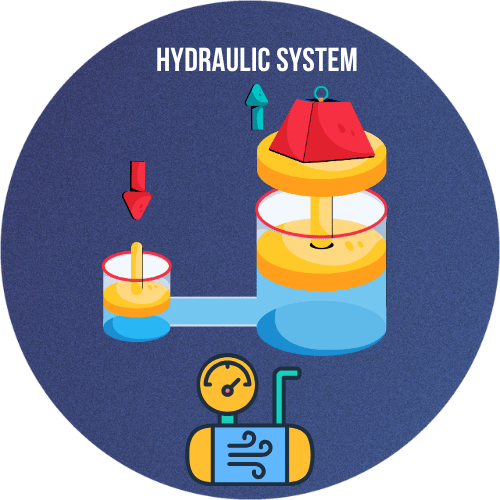 HYDRAULIC SYSTEM
  HYDRAULIC SYMBOLS
  HYDRAULIC STANDARDS
  HYDRAULIC CALCULATORS
  HYDRAULIC TOOLS
  BUYER’S GUIDES