
Piping Technology

WELCOME TO HYDRAULIC INSIGHT !!!

Understanding the Hydraulic System Working Principle

Contents

Hydraulic systems are the unseen driving force behind a vast range of modern machinery—from construction excavators and aircraft landing gear to manufacturing presses and automotive braking systems. These systems rely on the power of pressurized fluid to perform precise, powerful, and controlled movements that mechanical linkages or electric systems alone cannot easily achieve. But how do they work so efficiently and reliably? The answer lies in understanding the hydraulic system working principle.

At the heart of every hydraulic system is a simple concept derived from fluid mechanics: the use of incompressible fluid to transmit and multiply force. This principle enables small mechanical inputs to generate large amounts of output force, making hydraulic systems extremely efficient for heavy-duty applications. The entire system operates under Pascal’s Law, which states that pressure applied to a confined fluid is transmitted equally in all directions. This foundational theory is central to how force is distributed and controlled within hydraulic circuits.

As industries demand higher precision, faster performance, and safer operation, the importance of knowing the hydraulic system working principle becomes more critical than ever. Engineers, technicians, and students alike must grasp this concept to troubleshoot issues, design effective systems, and innovate for future efficiency gains.

This comprehensive guide will break down how hydraulic systems work, from the behavior of fluid under pressure to the functions of pumps, valves, actuators, and reservoirs. We’ll explore the different types of hydraulic systems, how components interact to create motion, and why hydraulic power continues to be the backbone of many industrial and mobile applications.

Whether you’re new to fluid power or seeking a deeper understanding, this article offers a complete look at the hydraulic system working principle, how it’s applied in real-world machines, and why it remains a cornerstone of modern engineering.


What is a Hydraulic System?

What is a Hydraulic System?

A hydraulic system is a mechanical setup that uses pressurized fluid to transmit power from one point to another. It functions based on the hydraulic system working principle, where fluid pressure is applied in a closed loop to move or control machinery with remarkable accuracy and strength. This system is widely employed in industries like construction, automotive, manufacturing, aerospace, and even robotics.

Basic Components of a Hydraulic System

To fully understand the hydraulic system working principle, it’s essential to get familiar with its core components:

  • Hydraulic Pump: Converts mechanical energy into hydraulic energy by moving hydraulic fluid into the system and creating flow.

  • Hydraulic Fluid: An incompressible liquid (often oil-based) that transmits energy through the system.

  • Valves: Regulate pressure, flow, and direction of the hydraulic fluid. Types include pressure control valves, directional control valves, and flow control valves.

  • Actuators: These include cylinders and hydraulic motors, converting fluid pressure back into mechanical energy to do work (e.g., lift a load or rotate a shaft).

  • Reservoir (Tank): Stores hydraulic fluid when not in use and provides cooling and de-aeration.

  • Filters: Ensure the hydraulic fluid remains clean, which is crucial for protecting sensitive components and maintaining system efficiency.

How the System Functions Together

When a hydraulic pump activates, it draws fluid from the reservoir and forces it into the system. The pressurized fluid is directed by control valves to the actuators. As pressure is applied, the actuators move accordingly—either in linear motion (hydraulic cylinders) or rotational motion (hydraulic motors). Once the work is done, the fluid returns to the reservoir, completing the loop.

The entire process works effectively because of the fundamental hydraulic system working principle: the efficient and consistent transmission of force through a confined fluid. This allows hydraulic systems to amplify small mechanical inputs into large force outputs with high precision.

In essence, a hydraulic system transforms energy into controlled motion, making it indispensable for countless mechanical operations.


History and Evolution of Hydraulic Systems

To fully appreciate modern fluid power technology, it helps to understand how the hydraulic system working principle has evolved over time. The history of hydraulic systems is a story of scientific discovery, engineering innovation, and industrial application that spans thousands of years.

Early Foundations of Hydraulic Principles

The use of water and fluid to create mechanical advantage dates back to ancient civilizations. The Egyptians utilized water channels and shadoofs (manual water-lifting devices) to irrigate their crops. However, it wasn’t until the 3rd century BCE that the groundwork for the hydraulic system working principle was formally laid.

The Greek mathematician Archimedes developed theories related to buoyancy and fluid pressure, including his famous principle describing the upward force on objects submerged in fluid. These early understandings of how fluids behave in confined spaces helped lay the foundation for more complex systems.

Pascal’s Law and Modern Hydraulics

The defining moment in the development of hydraulic systems came in the 17th century when French mathematician and physicist Blaise Pascal introduced Pascal’s Law. He stated that pressure applied to a confined fluid is transmitted equally in all directions. This core principle remains the basis of every hydraulic application today.

Pascal’s Law enabled inventors to develop machines that used small amounts of force to move large weights. This gave rise to hydraulic presses, lifts, and pumps that would revolutionize how work was performed in various fields.

Industrial Revolution and Expansion

During the Industrial Revolution in the 18th and 19th centuries, hydraulic power gained widespread use in factories, mining, and transportation. Hydraulic accumulators and rams were developed to supply power to cranes and elevators. This period marked the transition from water-driven systems to oil-based systems that offered better efficiency, lubrication, and control.

The hydraulic system working principle continued to evolve as engineers designed more sophisticated circuits, pumps, and control systems to manage power transmission with greater reliability and precision.

Hydraulics in the 20th and 21st Century

By the 20th century, hydraulic technology became critical in aviation, automotive, construction, and manufacturing sectors. Aircraft landing gear, power steering systems, and excavators all rely on hydraulic circuits designed around the same hydraulic system working principle first described centuries ago.

Today, modern hydraulic systems are integrated with electronics and sensors, creating electro-hydraulic systems that offer advanced control, safety features, and energy efficiency. With innovations like programmable logic controllers (PLCs) and smart sensors, hydraulics now support real-time monitoring and automation, marking a new era of intelligent fluid power systems.


The Hydraulic System Working Principle Explained

The Hydraulic System Working Principle Explained

At the core of every hydraulic device lies a fundamental rule that governs how the entire system behaves and performs: the hydraulic system working principle. This principle is derived from basic fluid dynamics and is grounded in Pascal’s Law, which explains how pressure behaves in a confined fluid system. Understanding this principle is essential for engineers, technicians, and designers to effectively build, maintain, and troubleshoot hydraulic equipment.

Pascal’s Law: The Foundation of Hydraulic Power

The hydraulic system working principle relies on Pascal’s Law, which states:

“Pressure exerted on a confined fluid is transmitted undiminished in all directions and acts with equal force on equal areas.”

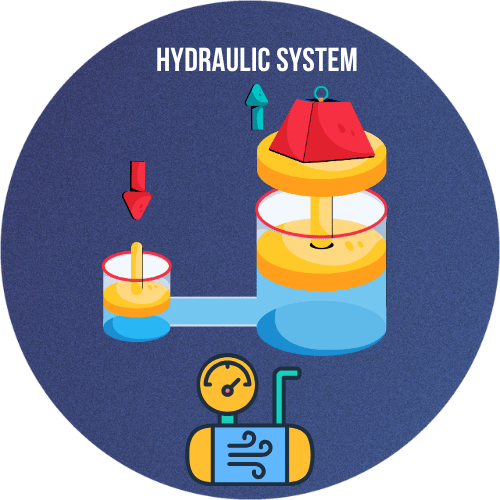
In simpler terms, when you apply force to a fluid in a closed system, that pressure travels through the fluid and can be used to do work elsewhere in the system. This allows for force multiplication—a small force applied at one point can generate a much larger force at another, making hydraulics ideal for heavy lifting and precision tasks.


Step-by-Step Breakdown of the Hydraulic Working Principle

Let’s walk through how a typical hydraulic system operates, based on this working principle:

  1. Energy Input

    • A hydraulic pump (mechanically driven by an engine or electric motor) pushes hydraulic fluid into the system.

    • The fluid used (usually oil) is incompressible, meaning it does not change in volume under pressure, which is essential for consistent force transmission.

  2. Fluid Transmission

    • The pump builds flow, and pressure is created by resistance (e.g., valves or actuators).

    • Valves direct the fluid toward different parts of the circuit, depending on the desired motion or load.

  3. Force Conversion

    • Actuators (like hydraulic cylinders or motors) convert fluid pressure into mechanical force.

    • A piston inside a cylinder moves linearly when pressure is applied to one side.

    • Motors rotate shafts when fluid enters at high pressure, useful in conveyor systems or rotating tools.

  4. Return Flow

    • Once work is completed, fluid flows back into the reservoir to be filtered, cooled, and reused.

    • This creates a closed-loop system that ensures fluid is constantly recirculated.


The Role of Pressure and Flow

Both pressure and flow rate are critical elements of the hydraulic system working principle:

  • Pressure determines how much force can be applied.

  • Flow rate determines how fast that force is applied (i.e., the speed of the actuator).

Together, they define the power output of the hydraulic system:

Power (kW) = Pressure (bar) × Flow rate (L/min) ÷ 600

This relationship helps designers match hydraulic components to the task at hand—whether it’s lifting a heavy load slowly or moving a light load quickly.


Closed vs. Open Circuits

  • In a closed-loop system, fluid continuously circulates between the pump and actuator with minimal loss, allowing for higher efficiency and finer control.

  • In an open-loop system, fluid returns to the reservoir after use, suitable for simpler applications.

Regardless of configuration, both use the same hydraulic system working principle—the transmission of power through pressurized fluid.


Practical Visualization

Consider a car jack: You apply force to a small handle, which presses fluid into a cylinder. That fluid pushes a piston upward, lifting a heavy vehicle with minimal effort from the user. This is a simple yet perfect illustration of the hydraulic system working principle in action.


Types of Hydraulic Systems and Their Working Principles

While all hydraulic systems are based on the same core concept—transmitting energy through pressurized fluid—there are multiple types of hydraulic systems, each tailored for different applications. Understanding these systems and how their internal structures affect operation helps clarify the versatility of the hydraulic system working principle.


1. Open-Loop Hydraulic Systems

An open-loop system draws hydraulic fluid from a reservoir, delivers it to the actuators (like cylinders or motors), and then returns the used fluid back to the reservoir. These systems are common in mobile and industrial applications where simplicity and ease of maintenance are key.

How it follows the hydraulic system working principle:

  • Fluid is pushed into the system by a pump.

  • Pressure is generated only when there is resistance to flow (e.g., actuator movement).

  • Once work is completed, the fluid is allowed to flow freely back to the tank.

  • Valve mechanisms control the flow and direction of fluid.

Use cases: Backhoes, forklifts, presses, dump trucks.


2. Closed-Loop Hydraulic Systems

A closed-loop system continuously circulates fluid between the pump and the actuator without returning it to a reservoir in the standard flow. Instead, only small amounts of fluid are added or drained via a charge circuit to maintain pressure and fluid level.

How it supports the hydraulic system working principle:

  • Fluid remains within the loop, reducing heat loss and increasing response time.

  • Pressure is maintained constantly within the loop.

  • Reversible flow enables bidirectional movement without complex valve arrangements.

Use cases: Hydrostatic transmissions, CNC machines, advanced mobile equipment.


3. Hydrostatic Hydraulic Systems

Hydrostatic systems specifically focus on fluid pressure (not velocity) to generate power. The working principle here emphasizes direct conversion of fluid pressure into motion, often used for high-torque, low-speed applications.

Relevance to hydraulic system working principle:

  • Fluid pressure is transferred directly to the actuator without relying on fluid momentum.

  • Ideal for precise movement or control applications.

Use cases: Tractors, elevators, winches, marine equipment.


4. Hydrodynamic Hydraulic Systems

In contrast to hydrostatic systems, hydrodynamic systems use fluid flow and velocity to create mechanical movement. This system is more dependent on fluid inertia and speed rather than pressure alone.

Alignment with the hydraulic system working principle:

  • Though less focused on high pressure, it still transmits force via fluid motion.

  • Often used in applications where smooth, continuous motion is required.

Use cases: Hydraulic couplings, torque converters.


5. Mobile vs. Industrial Hydraulic Systems

  • Mobile hydraulic systems: Found in vehicles and construction equipment. Typically operate in varying environments and use compact components.

  • Industrial hydraulic systems: Found in factories, manufacturing plants, and production lines. Designed for precision, continuous operation, and reliability.

Despite their differences, both are built upon the same hydraulic system working principle—the transfer of energy through fluid pressure to perform mechanical work.


Comparison Table

Type of System Pressure Source Fluid Flow Type Common Use Key Feature
Open-Loop Pump-generated One-way, returns to tank Mobile & general use Simpler design, easy to maintain
Closed-Loop Continuous pump Recirculating High-performance machinery Fast response, better efficiency
Hydrostatic Pressure-based Low-velocity Heavy equipment High torque, precise control
Hydrodynamic Flow-velocity High-speed flow Automotive transmissions Smooth motion, low torque

Hydraulic Fluids and Their Role in the Working Principle

A hydraulic system cannot function without one essential element—hydraulic fluid. This fluid is the medium through which energy is transmitted, pressure is applied, and mechanical force is converted into motion. The behavior and characteristics of hydraulic fluid play a vital role in ensuring that the hydraulic system working principle operates efficiently, safely, and reliably.


Why Hydraulic Fluid Matters

While components like pumps, valves, and actuators get most of the attention, it’s the hydraulic fluid that makes everything possible. The fluid:

  • Transmits power: By transferring pressure from one component to another.

  • Lubricates moving parts: Reduces wear and friction.

  • Cools the system: Absorbs and dissipates heat generated during operation.

  • Seals internal clearances: Minimizes leakage and maintains pressure.

  • Protects against corrosion: Prevents rust and degradation of internal surfaces.

These functions are essential to the execution of the hydraulic system working principle in real-world applications.


Types of Hydraulic Fluids

There are several types of hydraulic fluids, each selected based on the system’s demands, environmental conditions, and industry standards:

  • Petroleum-based oils: Most common, used in mobile and industrial systems due to their affordability and performance.

  • Synthetic fluids: Designed for extreme temperature and pressure conditions.

  • Water-based fluids: Less flammable, used in fire-sensitive environments.

  • Biodegradable fluids: Environmentally friendly, often used in agriculture or marine applications.

Each fluid type supports the hydraulic system working principle by ensuring that pressure is transmitted effectively with minimal loss and resistance.


Fluid Properties That Affect System Performance

To maintain reliable performance, the fluid must have specific properties:

Property Role in Hydraulic System Working Principle
Viscosity Affects flow rate, sealing, and lubrication. Too thick = sluggish; too thin = leaks.
Compressibility Should be as low as possible. Incompressible fluids allow accurate force transmission.
Thermal stability Resists degradation at high temperatures, ensuring continuous pressure delivery.
Cleanliness Contaminants like metal particles or water can damage components and hinder pressure control.

Poor fluid condition compromises the hydraulic system working principle, leading to inefficiencies, erratic operation, and equipment failure.


Contamination and Its Impact on Working Principle

Contaminated fluid disrupts the precise nature of hydraulic force transmission. It can cause:

  • Clogged valves

  • Abrasive wear on pump surfaces

  • Unstable actuator motion

  • Loss of pressure and control

This is why fluid filtration is a built-in function in all well-designed hydraulic systems. Clean fluid ensures the system consistently follows the intended hydraulic system working principle without interruption or degradation.


Monitoring and Maintenance of Hydraulic Fluid

To preserve fluid quality and system performance:

  • Check fluid levels regularly.

  • Monitor for signs of contamination (milky color, particles).

  • Change filters and fluid as specified by manufacturer guidelines.

  • Use diagnostic tools to assess viscosity, acidity, and water content.

Understanding the fluid’s role is essential because even the most advanced system will fail if the medium through which force is transmitted becomes compromised. The hydraulic system working principle can only be achieved if the fluid remains clean, stable, and properly selected for the application.


Components and How They Support the Working Principle

To fully understand the hydraulic system working principle, it’s crucial to examine the key components that bring this principle to life. Each part of a hydraulic system plays a specific role in generating, controlling, or applying force. Together, they form a closed-loop system where pressurized fluid is converted into mechanical work with precision and efficiency.


1. Hydraulic Pump – The Source of Flow

The hydraulic pump is the starting point of energy conversion in the system. It draws fluid from the reservoir and pressurizes it for delivery to other components. Pumps do not generate pressure directly—they generate flow. Pressure builds up when this flow encounters resistance (like a valve or actuator).

Contribution to hydraulic system working principle:

  • Provides the necessary flow of fluid

  • Enables force transmission by moving incompressible fluid

  • Without flow, no pressure or actuation can occur

Common pump types:

  • Gear pumps (simple and reliable)

  • Vane pumps (smooth operation)

  • Piston pumps (high-pressure applications)


2. Valves – The Control Center

Valves manage how, where, and when pressurized fluid flows through the system. They are essential to directing energy and ensuring the hydraulic system working principle operates under precise control.

Main valve types:

  • Directional control valves: Route fluid to specific actuators (e.g., move a piston forward or back)

  • Pressure control valves: Maintain system pressure, prevent overpressure

  • Flow control valves: Adjust speed of actuators by regulating flow rate

Contribution:

  • Enable operator to change direction and magnitude of fluid power

  • Protect the system from damage due to high pressure

  • Fine-tune performance based on load requirements


3. Hydraulic Actuators – Converting Pressure into Motion

Actuators are the “muscles” of the system. They receive fluid power and convert it into mechanical motion—either linear (hydraulic cylinders) or rotary (hydraulic motors).

Hydraulic Cylinders:

  • Extend and retract a rod using fluid pressure

  • Used in lifting, pressing, and pushing tasks

Hydraulic Motors:

  • Convert fluid energy into rotary motion

  • Ideal for winches, augers, and conveyor systems

Support for hydraulic system working principle:

  • Directly apply pressure-derived force to perform mechanical tasks

  • Translate energy into real, usable movement


4. Reservoir – The Fluid Bank

The hydraulic reservoir stores fluid not currently circulating. It also plays an important role in:

  • Cooling the fluid

  • Allowing entrained air to escape

  • Collecting and filtering contaminants

Support for working principle:

  • Ensures constant fluid availability for energy transmission

  • Helps maintain system pressure stability


5. Filters – System Protection

Filters keep hydraulic fluid clean, which is vital for ensuring that the hydraulic system working principle functions efficiently over time.

Contaminants can:

  • Damage pumps and valves

  • Cause internal leakage

  • Reduce system responsiveness

Filter types:

  • Suction filters (before pump)

  • Pressure filters (after pump)

  • Return line filters (before reservoir)


6. Accumulators – Energy Storage and Pressure Stability

Accumulators store hydraulic energy and release it when needed. They are used to:

  • Absorb shocks

  • Compensate for leaks

  • Maintain pressure during brief interruptions in flow

Support for working principle:

  • Ensure smooth pressure delivery

  • Enable energy recovery and system efficiency


System Integration: How Components Work Together

All components in a hydraulic system must operate in harmony to maintain proper pressure, flow, and direction. Their combined behavior is what allows the hydraulic system working principle to turn into physical action—lifting, clamping, rotating, or pushing loads with controlled force.

Without any single element—whether it’s the pump delivering flow or the valve directing pressure—the system would fail to function. Their seamless integration is what defines a successful hydraulic design.


Practical Applications of the Hydraulic System Working Principle

The hydraulic system working principle isn’t just a theoretical concept—it’s the backbone of many machines and operations across virtually every industrial sector. From lifting tons of weight to providing micro-movements in automated precision machines, hydraulic systems make it possible to perform tasks that would be difficult or impossible with purely mechanical or electrical methods.


1. Construction Equipment

Heavy machinery like excavators, bulldozers, and backhoes all rely on hydraulic systems to perform heavy lifting, digging, and pushing.

Examples:

  • Hydraulic cylinders move arms, booms, and buckets with tremendous force.

  • Control valves direct fluid to different parts of the machine based on operator input.

How it uses the hydraulic system working principle:

  • Fluid power is transmitted through pressurized lines to extend/retract cylinders.

  • High-force movement is achieved with minimal effort from the operator.


2. Automotive Industry

Hydraulic systems are used extensively in automotive systems for safety and performance.

Examples:

  • Hydraulic brakes: Apply pressure to brake calipers, stopping the vehicle.

  • Power steering systems: Use hydraulic pressure to assist in turning the steering wheel.

  • Suspension systems: Some high-performance or off-road vehicles use hydraulic dampers for improved ride control.

Working principle in action:

  • A small force on the brake pedal translates to a larger braking force through fluid pressure.

  • Ensures consistent, responsive, and reliable vehicle control.


3. Industrial Manufacturing

Hydraulics are foundational in manufacturing for tasks requiring repetitive, high-force, and precise control.

Examples:

  • Hydraulic presses: Used to mold, stamp, or shape metal and plastic parts.

  • Injection molding machines: Use hydraulic power to clamp and inject molten material.

  • Material handling: Hydraulic lifts, hoists, and conveyors are common in warehouses.

Relevance to hydraulic system working principle:

  • Delivers large, repeatable forces in a controlled environment.

  • Offers precise control over timing, pressure, and motion.


4. Aerospace and Aviation

Aircraft rely on hydraulic systems to operate critical flight and landing components.

Examples:

  • Landing gear actuation

  • Flap and slat movement

  • Thrust reversers and spoilers

Why hydraulics?

  • Hydraulic systems can deliver high power in a compact, lightweight form.

  • The hydraulic system working principle enables reliable function at extreme altitudes and conditions.


5. Marine and Offshore Systems

Ships and offshore rigs use hydraulics for anchor control, winching, steering systems, and loading equipment.

Examples:

  • Hydraulic steering gear in large vessels

  • Subsea control systems

  • Offshore cranes and pipe-laying equipment

How it relates:

  • Can withstand high-pressure underwater environments

  • Transmits power across long distances using fluid force


6. Agriculture and Forestry Equipment

Tractors, harvesters, and logging machines require flexible and powerful control systems.

Examples:

  • Hydraulic arms and buckets

  • Steering and brake assistance

  • Hydraulic lifts for plows and attachments

How it applies:

  • Enables multi-functional control through a centralized hydraulic power source

  • Follows the same hydraulic system working principle to deliver high torque and motion


7. Automation and Robotics

Precision hydraulics are used in robotic arms and industrial automation for high-load, high-precision operations.

Examples:

  • Robotic welding arms

  • Pick-and-place actuators in packaging lines

  • Pressurized grippers and lift tables

Value of the working principle:

  • Smooth, controlled motion

  • Accurate force modulation for delicate tasks


Summary of Key Advantages in Applications

Application Area Hydraulic Function Benefit from Working Principle
Construction Lifting, digging High force with precise control
Automotive Braking, steering Small input equals large force output
Manufacturing Pressing, clamping Consistent and repeatable operation
Aerospace Landing gear, control surfaces Compact, reliable, and powerful
Marine & Offshore Winching, steering, load handling Operates in extreme conditions
Agriculture Plowing, harvesting, lifting Versatile multi-tool capabilities
Robotics & Automation Precise movement, lifting Smooth and accurate actuation

Advantages and Limitations of Hydraulic System Working Principle

Understanding the hydraulic system working principle reveals not only how powerful and versatile these systems can be but also highlights their potential weaknesses. Like any engineering solution, hydraulics come with both benefits and trade-offs. Recognizing these will help engineers, operators, and decision-makers choose the right solution for their specific application.


Advantages of Hydraulic System Working Principle

The ability to transmit and multiply force through pressurized fluid offers several key advantages:


✅ 1. High Power Density

Hydraulic systems can produce significant force from compact components. This is ideal when space is limited but power requirements are high.

Example: A small hydraulic cylinder can lift tons of weight using the hydraulic system working principle, making it essential in construction and heavy equipment.


✅ 2. Precision and Control

Valves and actuators enable exact control of force, speed, and position.

  • Flow control allows variable movement speed.

  • Pressure control allows for safe and repeatable force application.

  • Directional control provides flexibility in motion.


✅ 3. Smooth and Steady Motion

Hydraulics excel at providing smooth, linear or rotary motion, particularly under load. This is essential in applications such as CNC machines or aircraft landing gear.


✅ 4. Wide Range of Applications

From micro-hydraulics in medical devices to massive offshore drilling rigs, the hydraulic system working principle scales across industries.


✅ 5. Overload Protection

Pressure relief valves protect the system by automatically releasing excess pressure, ensuring safe operation and equipment longevity.


Limitations of Hydraulic System Working Principle

Despite their strengths, hydraulic systems also have challenges and limitations that stem from the nature of fluid power.


❌ 1. Fluid Leakage

Hydraulic systems are prone to leakage due to the pressurized nature of the fluid. Leaks not only waste fluid but can create safety and environmental concerns.

  • Even small leaks reduce system efficiency.

  • Hydraulic fluid can be flammable or environmentally harmful if not properly contained.


❌ 2. Maintenance Requirements

Hydraulic systems need regular inspection and maintenance, including:

  • Fluid replacement and filtration

  • Seal and hose inspection

  • Monitoring for contamination and overheating

Failing to maintain the system disrupts the hydraulic system working principle and can lead to component damage.


❌ 3. Heat Generation

Friction in fluid flow and component movement generates heat, which must be managed through cooling systems or thermal-resistant components.


❌ 4. Sensitivity to Contamination

Contaminants in hydraulic fluid can:

  • Clog valves

  • Damage actuators and pumps

  • Lead to unpredictable operation

Even tiny particles can severely disrupt the system’s function.


❌ 5. Efficiency Loss at High Speed

While great for high-force, low-speed operations, hydraulic systems can suffer in high-speed applications due to pressure drops and fluid compressibility at extreme flow rates.


Summary Table: Pros and Cons

Category Advantages Limitations
Power High force from compact systems Efficiency drops in long lines or at high speed
Control Precise, adjustable force and speed Sensitive to contamination and fluid quality
Maintenance Durable with proper care Requires regular inspection and servicing
Safety Pressure relief systems prevent overload Risk of leaks and pressure surges
Scalability Works in large and small systems System complexity increases with functionality

Despite these limitations, the hydraulic system working principle remains the preferred method of power transmission in many applications because of its reliability, flexibility, and performance.


Troubleshooting and Maintenance Based on Working Principles

Effective troubleshooting and maintenance of hydraulic systems begins with a solid understanding of the hydraulic system working principle. Since hydraulic systems rely on fluid to transmit power, any issues that disrupt fluid flow, pressure, or cleanliness can cause system inefficiencies, failures, or even dangerous malfunctions.

This section explores how knowledge of the working principle helps identify problems early and maintain system performance over time.


Common Hydraulic System Issues and Their Root Causes

Symptom Likely Cause Connection to Hydraulic System Working Principle
Slow or weak actuator motion Low fluid flow or pressure loss Flow or pressure disrupted, violating energy transmission
Jerky or erratic motion Air in the system, contaminated fluid Fluid must be incompressible; air disrupts stability
Overheating Excessive pressure, clogged filters, pump strain Heat buildup from resistance in fluid flow
No movement Valve stuck, no fluid delivery No flow = no power transmission
Noisy operation Cavitation (air bubbles), worn components Interrupts smooth pressure flow

How Working Principles Guide Troubleshooting

Understanding the hydraulic system working principle simplifies problem-solving. Since the system depends on pressure and flow, the first step in troubleshooting is checking these two factors.

✅ Step-by-step troubleshooting approach:

  1. Check fluid level and condition

    • Low or contaminated fluid leads to pressure loss and component wear.

  2. Inspect for leaks

    • Leaks reduce pressure, which undermines force transmission.

  3. Verify pump operation

    • Ensure it is generating proper flow and is not cavitating.

  4. Check filters and valves

    • Clogged filters or malfunctioning valves restrict fluid movement.

  5. Test actuator response

    • Determine if cylinders or motors respond correctly to pressure commands.


Preventive Maintenance Based on Working Principles

Preventive maintenance helps preserve system performance and longevity. Since hydraulic systems operate under pressure and depend on fluid integrity, regular checks are vital.

🔧 Key preventive actions:

  • Regular fluid analysis: Check viscosity, contamination, and water content.

  • Filter replacement schedule: Keep the system clean to avoid component damage.

  • Seal and hose inspections: Prevent external leaks and air ingress.

  • System flushing: Remove sludge or built-up contaminants periodically.

  • Pressure calibration: Ensure valves and relief settings remain within spec.


Maintenance Best Practices Aligned with Working Principles

Task Purpose Link to Hydraulic System Working Principle
Maintain clean, proper fluid Ensures reliable pressure transmission Fluid is the energy carrier in the system
Monitor pump and actuator health Maintains effective energy conversion Mechanical motion depends on fluid force
Keep system free of air Prevents erratic motion and pressure spikes Air compressibility disrupts consistent power delivery
Schedule routine checks Avoids catastrophic failure, extends component life Ensures continuous compliance with working principle

Using Diagnostics Tools

Advanced systems often include sensors and displays that help monitor:

  • Pressure fluctuations

  • Flow rates

  • Temperature spikes

  • Contamination levels

These readings are essential for verifying that the system is adhering to the hydraulic system working principle. If anomalies are found, targeted interventions can be made before major issues arise.


In summary, the best way to maintain hydraulic performance is by regularly inspecting the system in light of its working principle. When pressure, flow, and fluid quality are maintained, hydraulic systems deliver consistent, powerful, and safe operation.


Future Trends and Innovations

The hydraulic system working principle has remained largely unchanged for over a century—but that doesn’t mean the technology has stood still. In today’s rapidly advancing industrial landscape, hydraulic systems are evolving to meet demands for higher efficiency, smarter controls, and greater environmental sustainability. Let’s explore the key innovations shaping the future of hydraulic systems.


1. Electro-Hydraulic Systems (EHS)

Electro-hydraulics combine the power of hydraulics with the precision of electronics. These systems use sensors, microcontrollers, and electric actuators to monitor and adjust hydraulic performance in real-time.

Benefits:

  • Enhanced precision and responsiveness

  • Energy-saving through demand-based control

  • Remote monitoring and diagnostics

Relation to hydraulic system working principle:

  • The fundamental principle remains the same—fluid transmits power—but now with real-time electronic feedback enhancing the control of flow and pressure.


2. Smart Hydraulics and IoT Integration

The rise of the Internet of Things (IoT) in industrial environments has enabled hydraulic systems to become “smart.”

Key features:

  • Cloud-based condition monitoring

  • Predictive maintenance using machine learning

  • Automated system adjustments to optimize efficiency

Smart hydraulic components collect data on pressure, temperature, and flow to ensure the system adheres to the hydraulic system working principle under all conditions—reducing downtime and improving reliability.


3. Eco-Friendly Hydraulic Fluids

Environmental regulations and sustainability initiatives are pushing the development of biodegradable and fire-resistant fluids.

Innovations:

  • Synthetic ester-based and water-glycol fluids

  • Low-toxicity and low-VOC formulations

  • Fluids with longer service life

These new fluids still maintain the pressure transmission needed by the hydraulic system working principle, while reducing environmental impact.


4. Energy-Efficient Designs

Traditional hydraulic systems often operate at constant flow and pressure, leading to energy waste. Newer systems use variable-speed drives (VSDs) and load-sensing pumps to deliver only what’s needed.

Energy-saving strategies:

  • Pump speeds adjust based on load demand

  • Regenerative circuits capture and reuse energy

  • Hydraulic accumulators reduce pump cycles

This increases overall system efficiency without compromising the essential hydraulic behavior defined by the working principle.


5. Compact and Modular Hydraulic Systems

Industry trends are moving toward compact, modular, and plug-and-play hydraulic units that reduce installation time and footprint.

Innovations include:

  • Integrated valve blocks

  • Self-contained power units

  • Hydraulic cartridges for quick replacement

These solutions still operate on the same hydraulic system working principle, but their simplified design makes them easier to use in tight or mobile environments.


6. Advanced Simulation and Digital Twin Technology

Modern software allows engineers to simulate fluid dynamics and predict system behavior before physical components are installed.

Benefits:

  • Reduces development time and cost

  • Identifies potential issues early

  • Ensures compliance with pressure and flow expectations

Digital twins replicate real-time hydraulic system performance using sensors and models, ensuring the system continuously follows the hydraulic system working principle.


7. Hybrid Hydraulic Systems

In certain applications, hydraulic systems are now being paired with electric systems to leverage the strengths of both.

Examples:

  • Electric drive for motion + hydraulic cylinder for force

  • Electric steering systems with hydraulic backup

The hybrid model still retains the essential function of fluid power where needed, continuing to apply the hydraulic system working principle in a more energy-conscious way.


Outlook for the Future

Hydraulic systems are not going away—they are becoming smarter, cleaner, and more efficient. With digitalization, better materials, and sustainability trends accelerating, the hydraulic system working principle will remain a foundational concept in engineering, but it will be applied in increasingly advanced ways.


Conclusion

Hydraulic systems have shaped the modern world, enabling heavy lifting, precision control, and efficient power transmission across industries. At the core of these achievements lies the hydraulic system working principle—a fundamental concept that transforms fluid pressure into mechanical motion.

From ancient water systems to today’s advanced electro-hydraulic machinery, this principle has remained consistent: applying force to an incompressible fluid within a confined system generates controlled movement and power. Whether it’s steering a car, operating a construction excavator, or powering an aircraft’s landing gear, the same working principle is behind the action.

Throughout this article, we’ve explored how hydraulic components—such as pumps, valves, actuators, and reservoirs—work together to bring this principle to life. We’ve also seen how different types of hydraulic systems apply the principle in unique ways, and how fluid selection, maintenance, and innovation all contribute to system performance and reliability.

Today’s technology continues to refine how the hydraulic system working principle is implemented, integrating smart controls, cleaner fluids, and energy-efficient components. As industries demand more precision, automation, and sustainability, hydraulic systems are evolving—but their foundational principle remains unchanged.

Whether you’re an engineer, technician, student, or machine operator, understanding the hydraulic system working principle is essential for designing, troubleshooting, and optimizing these powerful systems. With the right knowledge, hydraulic technology can be harnessed safely and effectively to power the machines that keep the world moving.

Hydraulic Cylinder Force Calculator

Closed Loop vs Open Loop Symbols in Hydraulics