 HYDRAULIC BASICS
  HYDRAULIC COMPONENTS
 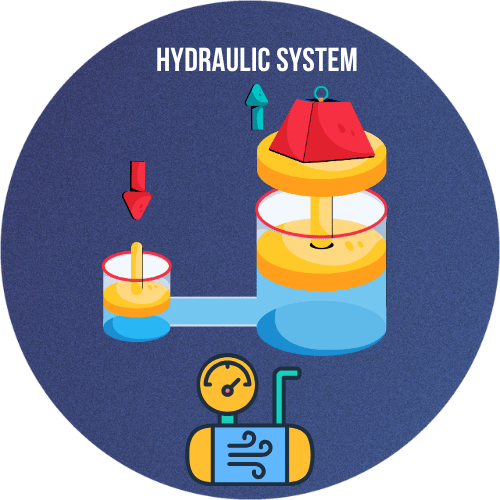 HYDRAULIC SYSTEM
  HYDRAULIC SYMBOLS
  HYDRAULIC STANDARDS
  HYDRAULIC CALCULATORS
  HYDRAULIC TOOLS
  BUYER’S GUIDES
How Does a Hydraulic System Work? Components, Working Principle & Process
Contents
- 1 1. What Is a Hydraulic System?
- 2 2. The Science Behind Hydraulic Systems
- 3 3. Main Components of a Hydraulic System
- 4 4. Step-by-Step: How a Hydraulic System Works
- 4.1 Step 1: Hydraulic Fluid Is Stored in the Reservoir
- 4.2 Step 2: The Pump Creates Hydraulic Flow
- 4.3 Step 3: Pressure Builds When Resistance Is Encountered
- 4.4 Step 4: Control Valves Direct the Fluid
- 4.5 Step 5: Hydraulic Actuators Perform Mechanical Work
- 4.6 Step 6: Hydraulic Fluid Returns to the Reservoir
- 4.7 The Continuous Hydraulic Cycle
- 5 5. Understanding Pressure, Flow Rate, and Force
- 6 6. Open-Center vs. Closed-Center Hydraulic Systems
- 7 7. Real-World Examples of Hydraulic Systems
- 8 8. Common Hydraulic System Problems
- 9 9. Advantages and Limitations of Hydraulic Systems
- 10 Frequently Asked Questions (FAQ)
- 10.1 How does a hydraulic system create force?
- 10.2 Does a hydraulic pump create pressure?
- 10.3 Why is hydraulic oil used instead of water?
- 10.4 What is the difference between hydraulics and pneumatics?
- 10.5 What determines the speed of a hydraulic cylinder?
- 10.6 What causes hydraulic systems to lose pressure?
- 10.7 How often should hydraulic fluid be replaced?
- 10.8 Why are hydraulic systems so powerful?
- 11 Conclusion
Hydraulic systems are everywhere—from excavators digging foundations and forklifts moving heavy pallets to aircraft landing gear and industrial presses shaping metal. Their ability to generate enormous force with precise control makes hydraulics one of the most widely used power transmission technologies in modern engineering. Whether lifting several tons of material or positioning a machine with millimeter-level accuracy, hydraulic systems deliver reliable performance in applications where mechanical or electrical systems alone may not be sufficient.
But how does a hydraulic system actually work? While the concept may seem complex, the operating principle is surprisingly straightforward. A hydraulic system uses an incompressible fluid—typically hydraulic oil—to transmit power from one location to another. By applying pressure to the fluid inside a sealed circuit, the system can multiply force, control movement, and perform heavy-duty work with remarkable efficiency. This principle, known as Pascal’s Law, forms the foundation of every hydraulic machine, regardless of its size or complexity.
Understanding how hydraulic systems work is valuable for engineers, technicians, maintenance professionals, students, and anyone working with industrial equipment. Knowing the function of each component, the flow of hydraulic fluid, and the relationship between pressure, flow rate, and force makes it easier to troubleshoot problems, improve system efficiency, and select the right hydraulic equipment for specific applications.
In this guide, you’ll learn the complete working process of a hydraulic system, explore its key components, understand the science behind hydraulic power, and see how hydraulic systems are used in real-world industries. By the end, you’ll have a solid understanding of how hydraulic energy is generated, controlled, and converted into powerful mechanical motion.
1. What Is a Hydraulic System?

A hydraulic system is a power transmission system that uses pressurized liquid—typically hydraulic oil—to transfer energy from one point to another. Instead of relying on gears, belts, or direct mechanical linkages, hydraulic systems use fluid under pressure to generate force and control motion. This allows machines to lift, push, pull, clamp, or rotate heavy loads with exceptional power and precision.
At its core, a hydraulic system converts mechanical energy into hydraulic energy, then back into mechanical motion. A prime mover, such as an electric motor or diesel engine, drives a hydraulic pump that moves fluid through the system. When the flowing fluid encounters resistance, pressure is created. This pressure is directed by control valves to hydraulic actuators—such as cylinders or hydraulic motors—which convert the hydraulic energy into useful work.
One of the biggest advantages of hydraulic systems is their ability to produce very large forces from relatively compact components. For example, a construction excavator can lift several tons of earth using hydraulic cylinders that are only a fraction of the machine’s overall size. Likewise, hydraulic presses can generate thousands of tons of force while maintaining smooth and accurate movement.
Hydraulic systems are found across numerous industries because of their versatility and reliability. Common applications include:
- Construction equipment such as excavators, bulldozers, and loaders
- Manufacturing machines including hydraulic presses and injection molding machines
- Agricultural equipment like tractors and harvesters
- Aircraft systems such as landing gear and flight controls
- Marine steering and deck machinery
- Automotive systems including hydraulic brakes and power steering
- Industrial automation and material handling equipment
Although hydraulic systems vary in size and complexity, they all share the same basic components:
- Hydraulic reservoir
- Hydraulic pump
- Hydraulic fluid
- Directional and pressure control valves
- Hydraulic cylinders or hydraulic motors
- Hoses, pipes, and fittings
- Filters and cooling devices
These components work together in a closed circuit to continuously circulate hydraulic fluid, allowing the system to deliver controlled power whenever it is needed.
2. The Science Behind Hydraulic Systems
The remarkable performance of hydraulic systems is based on a simple but powerful scientific principle known as Pascal’s Law. Formulated by the French mathematician and physicist Blaise Pascal in the 17th century, this law states that pressure applied to a confined incompressible fluid is transmitted equally in every direction throughout the fluid.
This principle explains why a relatively small input force can produce an extremely large output force when applied through hydraulic components of different sizes.
For example, when force is applied to a small piston inside a hydraulic pump or cylinder, pressure is generated within the hydraulic fluid. Because the fluid is nearly incompressible, this pressure travels uniformly throughout the entire hydraulic circuit. When the same pressure acts on a larger piston, the output force increases proportionally to the piston area.
This relationship can be summarized as:
- Pressure = Force ÷ Area
- Force = Pressure × Area
As a result:
- Increasing pressure increases available force.
- Increasing piston area also increases output force.
- Flow rate determines how fast an actuator moves rather than how much force it produces.
This distinction between pressure and flow is fundamental to understanding hydraulic systems. Pressure represents the system’s ability to overcome resistance, while flow determines the speed at which hydraulic cylinders extend or hydraulic motors rotate.
Another critical reason hydraulic systems work so effectively is the use of hydraulic oil. Unlike gases, hydraulic oil is nearly incompressible, meaning it does not significantly compress under high pressure. This allows force to be transmitted almost instantly with minimal energy loss, resulting in smooth, responsive, and highly controllable motion.
Beyond transmitting power, hydraulic fluid also serves several essential functions:
- Lubricates moving components to reduce wear
- Removes heat generated during operation
- Protects metal surfaces from corrosion
- Carries contaminants toward filters
- Helps seal internal clearances within pumps and valves
The combination of Pascal’s Law, incompressible fluid, and precisely engineered hydraulic components enables hydraulic systems to generate tremendous power while maintaining excellent accuracy and reliability. This scientific foundation is what makes hydraulics indispensable in industries ranging from heavy construction and manufacturing to aerospace and energy production.
3. Main Components of a Hydraulic System

Every hydraulic system consists of several interconnected components that work together to generate, control, and transmit hydraulic power. While system designs vary depending on the application, the core components remain largely the same. Understanding the role of each part makes it easier to diagnose problems, optimize performance, and maintain reliable operation.
Hydraulic Reservoir (Tank)
The hydraulic reservoir stores the hydraulic fluid used throughout the system. Beyond simply holding oil, the reservoir allows air bubbles to separate from the fluid, gives contaminants time to settle, and helps dissipate heat generated during operation.
A properly designed reservoir typically includes:
- Oil level indicator
- Filler breather cap
- Drain plug
- Internal baffles
- Return line positioned below the oil surface
Keeping the reservoir clean and maintaining the correct oil level are essential for system reliability.
Hydraulic Fluid
Hydraulic fluid is the medium that transfers power throughout the system. Most industrial hydraulic systems use specially formulated mineral-based hydraulic oil, although synthetic and biodegradable fluids are also available for specific environments.
Hydraulic fluid performs several important functions:
- Transmits hydraulic power
- Lubricates moving components
- Removes heat
- Protects against corrosion
- Helps seal internal clearances
- Carries contaminants to filters
Selecting the correct fluid viscosity and maintaining oil cleanliness significantly extends equipment life.
Hydraulic Pump
The hydraulic pump is the heart of the hydraulic system. Driven by an electric motor or internal combustion engine, it converts mechanical energy into hydraulic flow.
Contrary to a common misconception, the pump does not create pressure directly. Instead, it moves hydraulic fluid through the circuit. Pressure develops only when the moving fluid encounters resistance from a load or restriction.
Common hydraulic pump types include:
- Gear pumps
- Vane pumps
- Piston pumps
- Screw pumps
Each type offers different advantages in efficiency, pressure capability, and cost.
Control Valves
Hydraulic valves regulate how hydraulic fluid moves through the system. They determine where the fluid flows, how much pressure is allowed, and the speed of hydraulic actuators.
The three primary valve categories are:
Directional Control Valves
- Direct fluid to different parts of the system
- Control cylinder extension and retraction
- Reverse hydraulic motor rotation
Pressure Control Valves
- Limit maximum system pressure
- Protect components from overload
- Maintain stable operating pressure
Flow Control Valves
- Regulate fluid flow
- Control actuator speed
- Improve motion accuracy
Modern hydraulic systems often use proportional or servo valves for precise electronic control.
Hydraulic Actuators
Hydraulic actuators convert hydraulic energy into mechanical motion.
There are two primary actuator types:
Hydraulic Cylinders
- Produce linear motion
- Used for lifting, pushing, pressing, and clamping
- Available in single-acting and double-acting designs
Hydraulic Motors
- Produce rotary motion
- Drive wheels, conveyors, mixers, winches, and rotating equipment
- Deliver high torque at relatively low speeds
The actuator is where hydraulic power becomes useful mechanical work.
Hoses, Pipes, and Fittings
Hydraulic lines transport pressurized fluid between components.
Depending on pressure requirements, systems may use:
- Flexible hydraulic hoses
- Steel tubing
- Rigid piping
- High-pressure fittings
- Quick-connect couplings
Because these components operate under high pressure, proper installation and regular inspection are essential to prevent leaks and failures.
Filters and Cooling Devices
Contamination is one of the leading causes of hydraulic system failures. Hydraulic filters remove particles before they damage pumps, valves, and actuators.
Common filter locations include:
- Suction filters
- Pressure-line filters
- Return-line filters
- Offline filtration systems
Many hydraulic systems also include oil coolers or heat exchangers to maintain the proper operating temperature and prevent fluid degradation.
Pressure Gauges and Sensors
Pressure gauges and electronic sensors monitor system performance in real time.
They help operators:
- Verify operating pressure
- Detect abnormal conditions
- Troubleshoot system faults
- Prevent overload situations
- Monitor system health for predictive maintenance
Modern hydraulic systems increasingly use digital sensors connected to PLCs or industrial monitoring systems.
4. Step-by-Step: How a Hydraulic System Works

Although hydraulic machines can appear complex, the operating cycle follows a logical sequence. Every hydraulic system continuously circulates fluid through a closed loop, converting mechanical energy into hydraulic power and then into controlled mechanical motion.
Step 1: Hydraulic Fluid Is Stored in the Reservoir
The operating cycle begins with hydraulic oil stored inside the reservoir. The reservoir provides a clean supply of fluid while allowing contaminants, moisture, and trapped air to separate from the oil.
Before entering the pump, the fluid usually passes through a suction filter that removes large contaminants.
Step 2: The Pump Creates Hydraulic Flow
A motor or engine drives the hydraulic pump.
As the pump rotates, it draws oil from the reservoir and pushes it into the hydraulic circuit. At this stage, the pump creates flow, not pressure.
The amount of flow depends on:
- Pump displacement
- Pump speed
- Pump efficiency
Higher flow rates generally produce faster actuator movement.
Step 3: Pressure Builds When Resistance Is Encountered
As hydraulic fluid flows through the circuit, pressure remains relatively low until the fluid meets resistance.
Resistance may come from:
- A heavy load
- A hydraulic cylinder lifting an object
- A hydraulic motor driving machinery
- Flow restrictions created by valves
Once resistance is present, pressure increases automatically until it is sufficient to move the load.
This is why pressure is often described as the result of resistance to flow, rather than something generated directly by the pump.
Step 4: Control Valves Direct the Fluid
Directional control valves determine where the pressurized hydraulic fluid travels.
Depending on valve position, fluid may:
- Extend a hydraulic cylinder
- Retract a cylinder
- Rotate a hydraulic motor clockwise
- Reverse motor rotation
- Return directly to the reservoir
Pressure and flow control valves simultaneously regulate system pressure and actuator speed to ensure safe and efficient operation.
Step 5: Hydraulic Actuators Perform Mechanical Work
When pressurized oil enters a hydraulic actuator, hydraulic energy is converted into mechanical motion.
If the actuator is a hydraulic cylinder:
- The piston extends or retracts.
- Linear force is generated.
If the actuator is a hydraulic motor:
- Hydraulic pressure rotates internal components.
- Rotary torque is produced.
This is the stage where useful work—lifting, pressing, clamping, steering, or rotating—is performed.
Step 6: Hydraulic Fluid Returns to the Reservoir
After completing its work, the hydraulic fluid exits the actuator and flows through return lines.
Before reaching the reservoir, the oil often passes through:
- Return filters
- Oil coolers
- Heat exchangers
- Condition monitoring sensors
The cleaned and cooled fluid then re-enters the reservoir, ready to begin the next operating cycle.
The Continuous Hydraulic Cycle
This six-step process repeats continuously while the machine is operating:
- Oil is stored in the reservoir.
- The pump generates hydraulic flow.
- Resistance creates system pressure.
- Valves direct and regulate the flow.
- Actuators convert hydraulic energy into mechanical work.
- Oil returns to the reservoir for recirculation.
Because hydraulic fluid circulates continuously, the system can deliver smooth, precise, and repeatable motion even under heavy loads. This closed-loop process is what enables hydraulic systems to power everything from compact machine tools to massive mining excavators with exceptional efficiency and control.
5. Understanding Pressure, Flow Rate, and Force

To fully understand how a hydraulic system works, it’s essential to distinguish between pressure, flow rate, and force. These three concepts are closely related, yet each plays a different role in system performance. Confusing them is one of the most common mistakes made by beginners in hydraulics.
What Is Hydraulic Pressure?
Pressure is the amount of force applied over a specific area within the hydraulic fluid. It represents the system’s ability to overcome resistance and perform work.
Pressure is usually measured in:
- PSI (pounds per square inch)
- Bar
- MPa (megapascal)
Pressure only rises when the hydraulic fluid encounters resistance. For example, if a hydraulic cylinder is lifting a heavy load, the system pressure increases until it is high enough to move that load.
Higher pressure means the system can generate more force, but only if the components are designed to safely withstand the increased operating pressure.
What Is Flow Rate?
While pressure determines how much force a hydraulic system can generate, flow rate determines how fast an actuator moves.
Flow rate is commonly measured in:
- Gallons per minute (GPM)
- Liters per minute (L/min)
The hydraulic pump is responsible for producing flow. A pump with a larger displacement or higher rotational speed delivers more hydraulic fluid per minute, resulting in faster cylinder extension or higher hydraulic motor speed.
For example:
- Increasing flow makes a hydraulic cylinder extend faster.
- Reducing flow slows the actuator without significantly affecting available force.
This is why flow control valves are used to adjust machine speed while maintaining stable operating pressure.
How Force Is Generated
Hydraulic force is created when system pressure acts on the surface area of a piston.
The amount of force depends on two factors:
- Hydraulic pressure
- Piston area
A larger piston produces more force under the same pressure because the pressurized fluid acts on a greater surface area.
For example, if two hydraulic cylinders operate at the same pressure but one has twice the piston area, the larger cylinder will generate approximately twice the output force.
This principle allows hydraulic systems to multiply force efficiently without requiring massive mechanical components.
The Relationship Between Pressure, Flow, and Power
Pressure, flow, and force work together to determine overall hydraulic performance.
- Pressure provides the ability to overcome resistance.
- Flow controls the speed of movement.
- Force is the useful output produced by hydraulic actuators.
Hydraulic power depends on both pressure and flow. A system with high pressure but very low flow may generate tremendous force but move slowly, while a system with high flow and moderate pressure may operate quickly but produce less lifting capacity.
Engineers carefully balance these variables when designing hydraulic equipment to match the application’s requirements.
Common Misconceptions
Many people mistakenly believe the hydraulic pump creates pressure directly. In reality:
- The pump creates flow.
- Resistance creates pressure.
- Pressure acting on piston area produces force.
- Flow determines actuator speed.
Understanding this relationship makes it much easier to troubleshoot hydraulic systems and optimize machine performance.
6. Open-Center vs. Closed-Center Hydraulic Systems
Hydraulic systems are generally classified into two main circuit designs: open-center and closed-center. Although both perform the same basic function of transmitting hydraulic power, they manage oil flow differently and are suited for different types of machinery.
What Is an Open-Center Hydraulic System?
In an open-center hydraulic system, hydraulic fluid flows continuously from the pump back to the reservoir whenever no actuator is being operated.
When the directional control valves are in their neutral position, they provide an open path for the oil to circulate freely through the system with minimal pressure.
Once an operator activates a valve, the open passage is blocked, pressure builds, and hydraulic fluid is directed toward the selected actuator.
Advantages of Open-Center Systems
- Simple and economical design
- Lower manufacturing cost
- Easy maintenance and troubleshooting
- Well suited for machines with one function operating at a time
Limitations
- Continuous oil circulation generates heat.
- Pump consumes energy even when no work is being performed.
- Limited ability to operate multiple actuators simultaneously.
Typical Applications
Open-center systems are commonly used in:
- Small tractors
- Compact excavators
- Log splitters
- Agricultural machinery
- Basic hydraulic power units
What Is a Closed-Center Hydraulic System?
A closed-center hydraulic system blocks the flow of hydraulic fluid when all control valves are in the neutral position.
Instead of continuously circulating oil, the pump maintains standby pressure and only supplies flow when an actuator demands it. Most closed-center systems use variable displacement piston pumps that automatically adjust output to match system demand.
When an operator moves a control valve, the pump instantly increases flow while maintaining the required pressure.
Advantages of Closed-Center Systems
- Higher energy efficiency
- Reduced heat generation
- Faster system response
- Excellent control of multiple actuators
- Lower fuel or electricity consumption
- Better performance under varying loads
Limitations
- Higher initial equipment cost
- More complex hydraulic circuits
- Greater maintenance requirements
- Requires skilled troubleshooting
Typical Applications
Closed-center systems are widely used in:
- Large excavators
- Wheel loaders
- Mining equipment
- Forestry machines
- Aircraft hydraulic systems
- Industrial manufacturing equipment
- Mobile cranes
Open-Center vs. Closed-Center Comparison
| Feature | Open-Center | Closed-Center |
|---|---|---|
| Oil flow in neutral | Continuous | Stops until needed |
| Pump type | Fixed displacement | Usually variable displacement |
| Energy efficiency | Moderate | High |
| Heat generation | Higher | Lower |
| System complexity | Simple | More complex |
| Initial cost | Lower | Higher |
| Multiple functions | Limited | Excellent |
| Common applications | Agricultural equipment, small machinery | Heavy construction, industrial automation, aerospace |
Choosing between an open-center and closed-center hydraulic system depends on the application’s performance requirements, budget, and operating conditions. Open-center systems are ideal for simpler, cost-sensitive equipment, while closed-center systems provide superior efficiency and control for demanding industrial and mobile hydraulic applications.
7. Real-World Examples of Hydraulic Systems
Hydraulic systems are used in almost every industry where heavy loads must be lifted, moved, pressed, or controlled with precision. Their ability to generate high force from compact components makes them ideal for applications ranging from construction equipment to aircraft.
Below are some of the most common examples of hydraulic systems in everyday and industrial use.
Excavators
Excavators are among the best-known examples of hydraulic-powered machinery. Nearly every major movement of the machine relies on hydraulics.
Hydraulic cylinders are used to:
- Raise and lower the boom
- Move the stick
- Curl and uncurl the bucket
- Swing attachments
- Operate hydraulic breakers and other tools
Because hydraulic systems deliver high force at low speeds, excavators can dig through hard soil and lift heavy materials with excellent precision.
Hydraulic Presses
Hydraulic presses use pressurized fluid to generate extremely large compressive forces. They are widely used in manufacturing for shaping, forming, and assembling metal components.
Typical applications include:
- Metal stamping
- Forging
- Deep drawing
- Powder compaction
- Plastic molding
- Bearing installation
Large industrial presses can produce thousands of tons of force while maintaining precise control throughout the pressing cycle.
Forklifts
Forklifts use hydraulic systems to lift, lower, and tilt loads safely.
The hydraulic pump supplies pressurized oil to lift cylinders, allowing operators to raise pallets weighing several tons with minimal effort.
Hydraulic systems also provide smooth and controlled lowering, improving workplace safety and reducing product damage.
Agricultural Equipment
Modern farming equipment depends heavily on hydraulic power.
Examples include:
- Tractor three-point hitches
- Front-end loaders
- Harvesters
- Seed drills
- Balers
- Sprayers
Hydraulic cylinders adjust implements, while hydraulic motors drive conveyors, augers, and harvesting mechanisms.
Aircraft Hydraulic Systems
Commercial and military aircraft rely on hydraulics because hydraulic systems provide high power with relatively low weight.
Aircraft hydraulics typically operate:
- Landing gear extension and retraction
- Flight control surfaces
- Wheel brakes
- Cargo doors
- Nose wheel steering
- Thrust reversers
Because these functions are critical to flight safety, aircraft often use multiple independent hydraulic circuits for redundancy.
Industrial Manufacturing Equipment
Factories use hydraulic systems in countless production processes.
Common applications include:
- CNC machine tool clamping
- Injection molding machines
- Die casting equipment
- Steel rolling mills
- Robotic fixtures
- Material handling systems
Hydraulic power enables machines to perform repetitive tasks with consistent force and high reliability.
Automotive Applications
Although modern vehicles increasingly use electric systems, hydraulics remain important in many automotive applications.
Examples include:
- Hydraulic braking systems
- Clutch master and slave cylinders
- Power steering systems (older vehicles)
- Vehicle lifts in repair shops
- Hydraulic jacks
These systems provide dependable force transmission while requiring relatively simple mechanical designs.
Marine and Offshore Equipment
Ships and offshore platforms also depend on hydraulic power because hydraulic equipment performs reliably in harsh operating environments.
Typical marine hydraulic applications include:
- Steering gear
- Anchor winches
- Cranes
- Hatch covers
- Deck machinery
- Offshore drilling equipment
Hydraulic systems offer excellent durability and can operate under heavy loads even in corrosive marine conditions.
Why Hydraulics Are Used Across Industries
Despite differences in application, hydraulic systems are chosen for the same fundamental reasons:
- High power density
- Smooth and precise motion
- Excellent load-holding capability
- Reliable operation under heavy loads
- Compact component size
- Easy integration into complex machinery
From compact workshop tools to massive mining equipment, hydraulic technology continues to power some of the world’s most demanding machines.
8. Common Hydraulic System Problems
Even the most well-designed hydraulic system can experience performance issues if components wear out, hydraulic fluid becomes contaminated, or maintenance is neglected. Recognizing common hydraulic problems early helps reduce downtime, prevent costly repairs, and extend equipment life.
Hydraulic Leaks
Hydraulic leaks are one of the most common issues encountered in hydraulic systems.
Leaks may be:
- External leaks, where oil escapes from hoses, fittings, seals, or cylinders.
- Internal leaks, where worn components allow oil to bypass internally without visible signs.
Symptoms include:
- Reduced system pressure
- Slow actuator movement
- Increased oil consumption
- Dirty equipment
- Environmental contamination
Routine inspection of seals, hoses, and fittings can help detect leaks before they become major failures.
Air Contamination
Air entering the hydraulic system can cause erratic operation and reduce efficiency.
Common causes include:
- Loose suction fittings
- Damaged seals
- Low reservoir oil level
- Poor maintenance practices
Air contamination may result in:
- Spongy actuator movement
- Excessive pump noise
- Foamy hydraulic oil
- Vibration
- Reduced system responsiveness
Proper bleeding procedures and maintaining adequate oil levels help eliminate trapped air.
Hydraulic Fluid Contamination
Contaminated hydraulic oil is considered the leading cause of hydraulic component failure.
Common contaminants include:
- Dirt and dust
- Metal particles
- Water
- Air
- Chemical contaminants
Dirty oil accelerates wear in pumps, valves, and cylinders while increasing the risk of system failure.
Maintaining proper filtration and following scheduled oil changes are essential for long-term reliability.
Overheating
Hydraulic systems generate heat whenever fluid flows through restrictions or components.
Excessive temperatures may result from:
- Dirty oil coolers
- Blocked filters
- Excessive pressure
- Incorrect oil viscosity
- Continuous relief valve operation
Overheating can lead to:
- Reduced oil viscosity
- Seal damage
- Oxidation of hydraulic fluid
- Accelerated component wear
Monitoring oil temperature and maintaining cooling systems help prevent thermal damage.
Cavitation
Cavitation occurs when the hydraulic pump receives insufficient oil, causing vapor bubbles to form and collapse inside the pump.
Common causes include:
- Restricted suction lines
- Low oil level
- Clogged suction filters
- Oil viscosity that is too high
Symptoms include:
- Loud knocking or whining noises
- Pump vibration
- Reduced flow
- Premature pump failure
Preventing cavitation requires ensuring an unrestricted oil supply to the pump.
Pressure Loss
Low system pressure reduces machine performance and may prevent hydraulic actuators from completing their intended movement.
Possible causes include:
- Worn pumps
- Internal leakage
- Faulty pressure relief valves
- Damaged seals
- Incorrect valve settings
Pressure gauges and diagnostic equipment are valuable tools for locating pressure-related faults.
Slow or Erratic Actuator Movement
Hydraulic cylinders and motors that move slowly or inconsistently often indicate underlying system problems.
Possible causes include:
- Low pump output
- Air in the system
- Flow restrictions
- Dirty control valves
- Internal cylinder leakage
- Contaminated hydraulic oil
Accurate diagnosis usually requires checking system pressure, flow rate, and component condition.
Preventive Maintenance Best Practices
Many hydraulic failures can be avoided through regular maintenance and condition monitoring.
Recommended practices include:
- Inspect hoses, fittings, and seals for leaks.
- Monitor hydraulic fluid level and cleanliness.
- Replace filters according to manufacturer recommendations.
- Check system pressure and operating temperature regularly.
- Use the correct hydraulic fluid specification.
- Keep the reservoir clean and properly sealed.
- Inspect pumps, valves, and cylinders for unusual wear.
- Analyze hydraulic oil periodically to detect contamination or component wear.
A proactive maintenance program not only improves system reliability but also reduces operating costs and extends the service life of hydraulic equipment.
9. Advantages and Limitations of Hydraulic Systems
Hydraulic systems have become the preferred power transmission solution for many industries because they combine high power output with precise control. However, like any engineering technology, they also have limitations that should be considered when selecting equipment for a specific application.
Understanding both the strengths and weaknesses of hydraulics helps engineers design more efficient systems and choose the right technology for the job.
Advantages of Hydraulic Systems
High Power Density
One of the greatest advantages of hydraulics is the ability to generate enormous force from relatively compact components.
Compared with electric or purely mechanical systems, hydraulic cylinders and motors can produce significantly higher output for their size. This makes hydraulics ideal for heavy-duty equipment such as excavators, cranes, presses, and mining machinery.
Smooth and Precise Motion
Hydraulic systems provide excellent control over speed, position, and force.
By adjusting hydraulic flow and pressure, operators can achieve:
- Smooth acceleration and deceleration
- Accurate positioning
- Controlled lifting
- Stable load handling
This precision is especially important in manufacturing, aerospace, and industrial automation.
Easy Force Multiplication
Hydraulics use Pascal’s Law to multiply force efficiently.
A relatively small input force can generate an extremely large output force simply by increasing the actuator’s piston area. This allows machines to lift or press heavy loads without requiring oversized mechanical components.
Flexible Power Transmission
Hydraulic power can be transmitted through hoses and pipes over considerable distances.
Unlike gears or shafts, hydraulic lines can easily be routed around obstacles, making machine layouts more flexible and simplifying equipment design.
Built-In Overload Protection
Most hydraulic systems include pressure relief valves that automatically limit maximum operating pressure.
If the load exceeds the system’s capacity, excess pressure is safely diverted back to the reservoir instead of damaging pumps, cylinders, or piping.
This feature greatly improves equipment safety and reliability.
Reliable Operation in Harsh Environments
Hydraulic equipment performs well under demanding conditions, including:
- Heavy dust
- Mud
- High temperatures
- Cold climates
- Outdoor construction sites
- Marine environments
With proper maintenance, hydraulic systems can operate reliably for many years.
Limitations of Hydraulic Systems
Risk of Fluid Leakage
Hydraulic systems depend on seals, hoses, and fittings to contain pressurized fluid.
Over time, these components can wear, resulting in oil leaks that may cause:
- Reduced efficiency
- Environmental contamination
- Safety hazards
- Increased maintenance costs
Routine inspections help minimize leakage problems.
Regular Maintenance Requirements
Hydraulic systems require more maintenance than many electric systems.
Routine maintenance typically includes:
- Oil changes
- Filter replacement
- Seal inspection
- Hose replacement
- Fluid contamination monitoring
- Pressure testing
Neglecting maintenance often leads to premature component failure.
Heat Generation
Hydraulic systems naturally generate heat due to fluid friction and pressure losses.
If excessive heat is not properly removed, it can:
- Reduce oil viscosity
- Damage seals
- Accelerate oil oxidation
- Shorten component life
Many systems require oil coolers or heat exchangers to maintain proper operating temperatures.
Sensitivity to Contamination
Hydraulic components operate with extremely tight internal clearances.
Even microscopic particles can damage pumps, valves, and actuators.
Maintaining clean hydraulic fluid through proper filtration is one of the most important aspects of hydraulic maintenance.
Energy Losses
Although hydraulic systems are highly effective, they are not 100% efficient.
Energy losses occur through:
- Fluid friction
- Internal leakage
- Heat generation
- Pressure drops across valves
Modern hydraulic systems reduce these losses through improved pump designs, electronic controls, and variable displacement technology.
When Are Hydraulic Systems the Best Choice?
Hydraulic systems are generally the preferred solution when an application requires:
- Extremely high force
- Heavy load handling
- Smooth motion control
- Reliable overload protection
- Compact power transmission
- Continuous industrial operation
For lighter-duty or highly energy-efficient applications, electric actuators may offer advantages. However, for heavy industrial work, hydraulics remain one of the most powerful and dependable technologies available.
Frequently Asked Questions (FAQ)
How does a hydraulic system create force?
A hydraulic system creates force by applying pressure to an incompressible fluid. The pressurized fluid acts on the surface area of a hydraulic piston, producing a mechanical force capable of lifting, pushing, or moving heavy loads. Larger piston areas generate greater output force under the same hydraulic pressure.
Does a hydraulic pump create pressure?
No. A hydraulic pump creates flow, not pressure.
Pressure develops only when the flowing hydraulic fluid encounters resistance, such as a hydraulic cylinder lifting a load or a valve restricting flow. The pump supplies continuous fluid movement, while system resistance determines operating pressure.
Why is hydraulic oil used instead of water?
Hydraulic oil is preferred because it provides several important benefits beyond power transmission:
- Excellent lubrication
- Corrosion protection
- Heat removal
- Seal lubrication
- Stable viscosity
- Long service life
Water lacks adequate lubrication and can promote corrosion, making it unsuitable for most hydraulic systems.
What is the difference between hydraulics and pneumatics?
Both systems use fluid power, but they operate with different working media.
| Hydraulic Systems | Pneumatic Systems |
|---|---|
| Use hydraulic oil | Use compressed air |
| Produce very high force | Produce lower force |
| Highly precise control | Faster but less precise |
| Higher operating pressure | Lower operating pressure |
| Ideal for heavy machinery | Ideal for light automation |
Hydraulic systems are typically used where high power is required, while pneumatic systems are better suited for fast, repetitive motions with lighter loads.
What determines the speed of a hydraulic cylinder?
Cylinder speed depends primarily on hydraulic flow rate.
Increasing pump flow or opening a flow control valve allows more hydraulic fluid to enter the cylinder, causing it to move faster. Pressure affects the available force but does not directly determine speed.
What causes hydraulic systems to lose pressure?
Pressure loss may result from:
- Internal leakage
- Worn hydraulic pumps
- Faulty pressure relief valves
- Damaged seals
- Contaminated hydraulic fluid
- External leaks
- Improper valve settings
Regular inspection and maintenance help identify these issues before they affect machine performance.
How often should hydraulic fluid be replaced?
There is no universal replacement interval.
Hydraulic oil should be changed according to:
- Equipment manufacturer recommendations
- Operating conditions
- Oil analysis results
- Fluid contamination level
- Temperature history
Many industrial facilities rely on oil analysis rather than fixed schedules to maximize fluid life while protecting hydraulic components.
Why are hydraulic systems so powerful?
Hydraulic systems combine Pascal’s Law with nearly incompressible hydraulic fluid, allowing pressure to be transmitted uniformly throughout the system. By applying this pressure to larger piston areas, hydraulic actuators can generate tremendous force while maintaining smooth and accurate control.
Conclusion
Hydraulic systems are among the most efficient and versatile methods of transmitting power in modern engineering. By using pressurized hydraulic fluid, they can convert relatively small mechanical inputs into powerful, controlled motion capable of lifting heavy loads, operating industrial machinery, and performing highly precise movements.
The operation of a hydraulic system follows a continuous cycle: a hydraulic pump draws fluid from the reservoir, creates flow, and sends the fluid through control valves to hydraulic cylinders or motors. As resistance develops, pressure builds within the system, allowing actuators to generate the force needed to perform useful work. After completing the task, the hydraulic fluid returns to the reservoir, where the cycle begins again.
Understanding the relationship between pressure, flow rate, and force is essential for designing, operating, and troubleshooting hydraulic equipment. Equally important is recognizing the function of key components—including pumps, valves, cylinders, reservoirs, filters, and hydraulic fluid—which work together to ensure reliable and efficient performance.
Although hydraulic systems require proper maintenance and contamination control, their advantages far outweigh their limitations. Their ability to deliver exceptional power density, precise motion control, overload protection, and dependable operation has made them indispensable in industries such as construction, manufacturing, agriculture, aerospace, mining, marine engineering, and industrial automation.
Whether you’re an engineer, technician, student, or equipment owner, a solid understanding of how hydraulic systems work provides the foundation for selecting the right components, improving system efficiency, reducing downtime, and extending equipment life. As hydraulic technology continues to evolve with smart sensors, electronic controls, and energy-efficient designs, it will remain a cornerstone of modern machinery and industrial innovation for years to come.
Hydraulic Tube Size Chart: Complete Guide to Tube Sizes, Pressure Ratings & Dimensions
Pump Symbols in P&ID diagrams: Complete Guide to Process, Hydraulic, and ISO Pump Symbols

Contents1 1. What Is a Control Valve?1.1 Primary Functions of a Control Valve1.2 Control Valve in a Process Control Loop1.3 Control Valve vs. Manual Valve1.4 Common Types of Control Valves1.4.1 Linear-motion control valves1.4.2 Rotary-motion control valves2 2. Main Components of a Control Valve2.1 Valve Body2.2 Valve Trim2.3 Closure Element2.4 Valve Seat2.5 Valve Stem or Shaft2.6 […]

Contents1 1. Basics of Hydraulic Pressure1.1 1. What Is Hydraulic Pressure?1.2 2. Pascal’s Law — The Foundation of Hydraulics1.3 3. How Hydraulic Pressure Is Created1.4 4. Units Used to Measure Hydraulic Pressure1.5 5. Why Hydraulic Pressure Is So Powerful1.6 6. Everyday Examples of Hydraulic Pressure2 2. Importance of Understanding Hydraulic Pressure2.1 1. Ensures Safe Operation2.2 […]

Contents1 1. What Is Pascal’s Law?1.1 1.1 Definition of Pascal’s Law1.2 1.2 Mathematical Representation1.3 1.3 Example in Practice1.4 1.4 Historical Context1.5 1.5 The Importance of Pascal’s Law in Engineering2 2. Scientific Principles Behind Pascal’s Law2.1 2.1 The Nature of Fluids2.2 2.2 Pressure in a Fluid at Rest2.3 2.3 Pressure and Surface Area2.4 2.4 Closed System […]