 HYDRAULIC BASICS
  HYDRAULIC COMPONENTS
 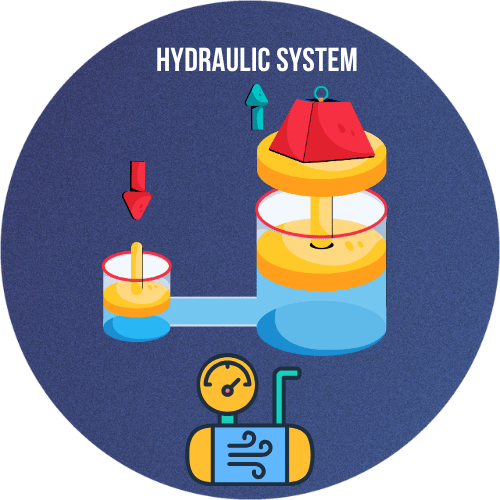 HYDRAULIC SYSTEM
  HYDRAULIC SYMBOLS
  HYDRAULIC STANDARDS
  HYDRAULIC CALCULATORS
  HYDRAULIC TOOLS
  BUYER’S GUIDES
Hydraulic Systems in Manufacturing Industry: Applications, Components & Benefits
Contents
- 1
- 2 1. What Are Hydraulic Systems in Manufacturing Industry?
- 3 2. Main Components of Hydraulic Manufacturing Systems
- 4 3. How Hydraulic Systems Work in Manufacturing Operations
- 5 4. Applications of Hydraulic Systems in Manufacturing Industry
- 6 5. Benefits of Hydraulic Systems in Manufacturing
- 7 6. Challenges and Limitations of Hydraulic Manufacturing Systems
- 8 7. Hydraulic Systems vs Pneumatic and Electric Systems in Manufacturing
- 9 8. Maintenance and Troubleshooting of Hydraulic Systems in Manufacturing Plants
- 10 9. Future Trends of Hydraulic Systems in Manufacturing Industry
- 11 Conclusion

Hydraulic Systems in Manufacturing Industry play a critical role in modern industrial production by providing the power, force, and motion required to operate manufacturing equipment. From heavy metal forming machines to high-precision automated production lines, hydraulic technology remains one of the most widely used power transmission methods in manufacturing facilities worldwide.
Manufacturing operations often require equipment capable of producing high force output, controlled motion, repetitive operation, and reliable performance under demanding conditions. Hydraulic systems meet these requirements by using pressurized fluid to transmit power efficiently through pumps, cylinders, valves, and control components.
Today, hydraulic systems are commonly found in:
- Hydraulic Presses
- Injection Molding Machines
- CNC Manufacturing Equipment
- Metal Forming Systems
- Die Casting Machines
- Industrial Automation Systems
- Material Handling Equipment
- Robotic Manufacturing Applications
Compared with purely mechanical systems, hydraulic systems offer superior force multiplication, precise speed control, flexible design integration, and heavy-load capability. Because of these advantages, hydraulics continue to be essential across industries such as automotive manufacturing, aerospace production, steel fabrication, plastics processing, electronics manufacturing, and heavy industrial equipment production.
This guide explains the working principles, major components, applications, advantages, maintenance requirements, and future trends of Hydraulic Systems in Manufacturing Industry.
1. What Are Hydraulic Systems in Manufacturing Industry?
A Hydraulic System in Manufacturing Industry is a power transmission system that uses pressurized hydraulic fluid to generate, control, and transfer mechanical force within industrial manufacturing equipment.
The operating principle is based on fluid power technology.
Instead of transmitting power through gears, belts, or compressed air, hydraulic systems rely on hydraulic fluid flowing under pressure to produce controlled movement and large mechanical forces.
Basic Hydraulic Operating Principle

Hydraulic systems operate according to Pascal’s Law, which states that pressure applied to a confined fluid is transmitted equally throughout the fluid.
This principle allows hydraulic systems to multiply force effectively.
A basic manufacturing hydraulic system typically includes:
- Hydraulic Pump
- Hydraulic Fluid
- Hydraulic Reservoir
- Hydraulic Valves
- Hydraulic Cylinders or Motors
- Filters and Control Components
The pump generates fluid flow, valves regulate system behavior, and actuators convert hydraulic energy into mechanical motion.
Why Manufacturers Use Hydraulic Technology
Manufacturing environments frequently require equipment capable of producing very high forces while maintaining accurate control.
Hydraulic systems are widely used because they can provide:
- High force generation
- Smooth motion control
- Adjustable operating speed
- Repetitive industrial performance
- Compact power transmission
For example, a hydraulic press may generate hundreds or thousands of tons of pressing force using relatively compact equipment.
Hydraulic Systems vs Mechanical and Pneumatic Systems
Hydraulic systems differ from other industrial power technologies.
Hydraulic vs Mechanical Systems
Mechanical systems rely on:
- Shafts
- Gears
- Chains
- Belts
Hydraulic systems instead use fluid pressure to transmit power.
Hydraulics often provide greater flexibility for:
- Force control
- Variable motion
- Remote power transmission
Hydraulic vs Pneumatic Systems
Pneumatic systems use compressed air.
While pneumatic equipment offers fast movement and simpler maintenance, hydraulics generally provide:
- Higher force capacity
- Better load handling
- Improved precision for heavy-duty operations
Importance in Modern Manufacturing
Modern manufacturing increasingly depends on automation, precision control, and high productivity.
Hydraulic systems support these objectives by enabling:
- High-speed production cycles
- Heavy material forming
- Precision positioning
- Automated machine operation
They remain essential technologies in many manufacturing sectors where high power density and reliable force generation are required.
Because of their versatility and performance capability, hydraulic systems continue to be foundational components of industrial manufacturing infrastructure.
2. Main Components of Hydraulic Manufacturing Systems
Hydraulic manufacturing systems consist of multiple components working together to generate, control, and transmit hydraulic power throughout industrial equipment.

Each component performs a specific function within the system.
Understanding these components is essential for designing, operating, maintaining, and troubleshooting manufacturing hydraulic systems.
Hydraulic Pumps
The hydraulic pump is the heart of the hydraulic system.
Its primary function is to convert mechanical energy into hydraulic fluid flow.
Common hydraulic pumps used in manufacturing include:
- Gear Pumps
- Vane Pumps
- Piston Pumps
- Axial Piston Pumps
Manufacturing applications often select pumps based on:
- Flow requirements
- Pressure capability
- Efficiency targets
- Equipment operating conditions
The pump supplies the hydraulic energy required to operate cylinders, motors, and industrial actuators.
Hydraulic Cylinders
Hydraulic cylinders are among the most common actuators in manufacturing systems.
They convert hydraulic pressure into linear mechanical motion.
Industrial manufacturing frequently uses hydraulic cylinders for:
- Pressing
- Clamping
- Lifting
- Forming
- Positioning operations
Common cylinder types include:
- Single-Acting Cylinders
- Double-Acting Cylinders
- Telescopic Cylinders
Because hydraulic cylinders can generate extremely high force output, they are widely used in heavy-duty manufacturing equipment.
Hydraulic Motors
Unlike cylinders, hydraulic motors convert hydraulic energy into rotational mechanical motion.
Manufacturing applications using hydraulic motors include:
- Conveyor systems
- Rotating machinery
- Material handling systems
- Industrial tooling equipment
Common hydraulic motor types include:
- Gear Motors
- Vane Motors
- Piston Motors
Hydraulic motors allow industrial equipment to achieve controlled torque and speed performance.
Hydraulic Valves
Hydraulic valves control fluid movement inside the system.
Their primary functions include:
- Direction control
- Flow control
- Pressure regulation
Important valve categories include:
Directional Control Valves
Control fluid routing and actuator movement.
Pressure Control Valves
Protect the system and regulate operating pressure.
Flow Control Valves
Adjust speed and actuator performance.
Valves play a critical role in maintaining safe and predictable manufacturing operation.
Hydraulic Reservoirs and Hydraulic Fluid
The hydraulic reservoir stores system fluid and supports stable operation.
Functions include:
- Fluid storage
- Heat dissipation
- Contaminant settling
- Air separation
Hydraulic fluid itself serves multiple functions:
- Power transmission
- Lubrication
- Cooling
- Corrosion protection
Proper fluid selection is extremely important for manufacturing system reliability.
Filters, Accumulators, and Sensors
Additional components improve performance and protection.
Hydraulic Filters remove contaminants that may damage pumps, valves, and actuators.
Hydraulic Accumulators store pressurized hydraulic energy and help stabilize system performance.
Sensors and Monitoring Devices measure variables such as:
- Pressure
- Temperature
- Flow
- Fluid condition
Modern manufacturing systems increasingly use sensor-based monitoring to improve reliability and predictive maintenance capability.
Why Component Integration Matters
Hydraulic performance depends on how well these components operate together.
Proper component integration affects:
- System efficiency
- Production reliability
- Equipment lifespan
- Energy consumption
- Maintenance requirements
A well-designed hydraulic manufacturing system requires balanced component selection and proper engineering integration.
3. How Hydraulic Systems Work in Manufacturing Operations

Hydraulic systems in manufacturing operate by converting mechanical energy into hydraulic energy and then transforming that hydraulic energy into controlled mechanical motion.
Although system configurations vary by application, most manufacturing hydraulic systems follow similar operating principles.
Step 1 — Hydraulic Power Generation
The process begins with hydraulic power generation.
An electric motor or engine drives the hydraulic pump.
The pump draws hydraulic fluid from the reservoir and generates fluid flow under pressure.
This pressurized fluid becomes the energy source for the manufacturing system.
Step 2 — Fluid Flow and Pressure Creation
Hydraulic systems rely on both:
- Flow
- Pressure
Flow determines the movement rate of actuators.
Pressure determines the force capability of the system.
Hydraulic fluid travels through:
- Pipes
- Tubes
- Hoses
- Manifolds
toward valves and actuators.
Controlled pressure generation allows manufacturing equipment to perform demanding industrial operations.
Step 3 — Force Multiplication Principle
One major advantage of hydraulics is force multiplication.
Using Pascal’s Law, hydraulic systems can generate very large output forces from relatively compact equipment.
Examples include:
- Hydraulic presses producing thousands of tons of force
- Clamping systems holding heavy components
- Forming equipment shaping metal products
This capability makes hydraulics ideal for manufacturing environments requiring heavy mechanical loads.
Step 4 — Motion and Speed Control
Hydraulic systems provide precise control over:
- Motion direction
- Speed
- Position
- Applied force
Directional valves determine actuator movement.
Flow control valves adjust operating speed.
Pressure valves regulate force output and system protection.
This high level of controllability supports precision manufacturing processes.
Open-Loop and Closed-Loop Hydraulic Circuits
Manufacturing systems may use:
Open-Loop Hydraulic Circuits
Fluid returns to the reservoir after completing work.
Closed-Loop Hydraulic Circuits
Fluid circulates directly between components for specialized performance applications.
System configuration depends on:
- Machine design
- Efficiency requirements
- Control complexity
- Production objectives
Example Manufacturing Workflow
A hydraulic press operation demonstrates a typical manufacturing workflow.
- Electric motor starts the hydraulic pump.
- Pump generates hydraulic fluid flow.
- Directional valve routes fluid toward the cylinder.
- Hydraulic cylinder extends.
- Pressing force is applied to the workpiece.
- Control valves regulate motion and pressure.
- Cylinder retracts after operation completion.
This workflow illustrates how hydraulic energy becomes controlled mechanical work inside industrial manufacturing equipment.
Why Hydraulic Operating Principles Matter
Understanding hydraulic operation helps engineers:
- Improve equipment design
- Optimize productivity
- Diagnose system problems
- Improve energy efficiency
- Increase equipment reliability
A strong understanding of hydraulic operating principles is essential for modern manufacturing engineering.
4. Applications of Hydraulic Systems in Manufacturing Industry

Hydraulic systems are used extensively throughout manufacturing because they can generate large forces, deliver precise motion control, and operate reliably under demanding industrial conditions.
Their versatility makes them suitable for both heavy-duty equipment and highly automated production environments.
Hydraulic Presses
Hydraulic presses are among the most common manufacturing applications of hydraulic technology.
They use hydraulic pressure to generate powerful compressive forces for industrial operations.
Common applications include:
- Metal stamping
- Forging
- Punching
- Deep drawing
- Powder compaction
- Plastic molding
Hydraulic presses are widely used because they provide:
- High force output
- Smooth motion control
- Adjustable operating pressure
- Flexible stroke control
Heavy manufacturing industries often depend on hydraulic presses for high-load forming operations.
Injection Molding Machines
Injection molding systems rely heavily on hydraulics.
Hydraulic systems power functions such as:
- Mold clamping
- Injection movement
- Ejector operation
- Machine actuation
Industries using hydraulic injection molding include:
- Plastic manufacturing
- Automotive component production
- Consumer products
- Electronics manufacturing
Hydraulic systems provide the large clamping forces needed for accurate mold operation.
Metal Forming and Die Casting Equipment
Hydraulics are widely used in metal processing industries.
Applications include:
- Metal bending
- Sheet metal forming
- Rolling operations
- Extrusion systems
- Die casting machines
These manufacturing processes often require extremely high forces combined with controlled motion.
Hydraulic power allows manufacturers to process strong materials while maintaining precision and repeatability.
CNC Machines and Robotic Manufacturing Systems
Modern manufacturing increasingly combines hydraulics with automation technologies.
Hydraulic systems may support:
- Tool clamping
- Fixture positioning
- Automated workholding
- Heavy robotic motion control
In advanced factories, hydraulic equipment frequently operates alongside:
- CNC machinery
- Industrial robots
- Automated production cells
- Smart manufacturing systems
Material Handling and Assembly Line Applications
Hydraulic systems are also common in material handling operations.
Typical applications include:
- Lift tables
- Industrial conveyors
- Hydraulic manipulators
- Transfer systems
- Automated assembly equipment
Manufacturing facilities use hydraulic systems to improve:
- Production speed
- Load handling capability
- Workplace safety
- Process efficiency
Manufacturing Industries Using Hydraulic Systems
Hydraulic systems support numerous manufacturing sectors.
Examples include:
- Automotive Manufacturing
- Aerospace Production
- Steel and Metal Fabrication
- Plastics Processing
- Electronics Manufacturing
- Food Processing Equipment Manufacturing
Their ability to deliver dependable force and motion control makes hydraulics valuable across many industrial applications.
5. Benefits of Hydraulic Systems in Manufacturing

Hydraulic systems continue to be widely adopted because they offer significant performance advantages compared with many alternative power transmission technologies.
These benefits contribute directly to improved manufacturing productivity and equipment capability.
High Power Density
One of the greatest advantages of hydraulic systems is high power density.
Hydraulic equipment can generate extremely large forces using relatively compact components.
Compared with many mechanical or pneumatic systems, hydraulics often deliver:
- Greater power output
- Smaller equipment footprint
- Higher force capability
This makes hydraulic technology ideal for space-constrained manufacturing environments.
Large Force Generation Capability
Manufacturing operations frequently require large working forces.
Hydraulic systems excel in applications involving:
- Pressing
- Clamping
- Lifting
- Heavy material processing
- Forming operations
Hydraulic cylinders and actuators can produce powerful mechanical output while maintaining controlled operation.
Precision Motion and Force Control
Hydraulic systems provide excellent control over:
- Speed
- Position
- Direction
- Applied force
This precise controllability supports demanding manufacturing processes requiring:
- Repeatability
- Dimensional accuracy
- Controlled movement
Modern electro-hydraulic systems further enhance precision performance.
Flexible Equipment Design
Hydraulic power systems offer design flexibility.
Because power is transmitted through fluid lines, equipment layouts can be optimized more easily.
Benefits include:
- Remote actuator placement
- Compact machine configuration
- Flexible system integration
- Simplified heavy-load motion control
This flexibility supports innovative manufacturing equipment design.
Reliable Heavy-Duty Operation
Manufacturing equipment often operates continuously under severe conditions.
Hydraulic systems are valued for their ability to handle:
- High loads
- Shock loading
- Continuous operation
- Harsh industrial environments
Properly maintained hydraulic systems can provide long-term operational reliability.
Improved Manufacturing Productivity
Hydraulic systems help manufacturers improve production efficiency.
Benefits include:
- Faster cycle times
- Automated operation
- Reduced manual labor
- Consistent product quality
These advantages contribute directly to improved operational productivity and manufacturing competitiveness.
Automation and Smart Manufacturing Compatibility
Modern hydraulic systems increasingly support automation strategies.
Hydraulic technology integrates with:
- PLC control systems
- Sensors
- Industrial automation platforms
- Industry 4.0 monitoring systems
This compatibility helps manufacturers build smarter and more connected production environments.
Why Manufacturing Still Relies on Hydraulics
Despite the growth of electric and pneumatic technologies, hydraulic systems remain essential because they combine:
- High force output
- Precision control
- Heavy-duty reliability
- Flexible industrial integration
For many manufacturing applications, hydraulic systems continue to provide performance levels that are difficult to achieve using alternative technologies.
6. Challenges and Limitations of Hydraulic Manufacturing Systems
Although hydraulic systems provide major advantages in manufacturing, they also present operational challenges that engineers and plant operators must manage carefully.
Understanding these limitations helps manufacturers improve reliability, reduce downtime, and optimize equipment performance.
Hydraulic Leaks and Fluid Loss
One of the most common hydraulic system problems is fluid leakage.
Leaks may occur from:
- Hoses
- Seals
- Pipe fittings
- Cylinders
- Valves
- Pump connections
Hydraulic leaks can create several operational problems including:
- Reduced system pressure
- Lower equipment performance
- Safety hazards
- Increased maintenance costs
- Environmental contamination
Proper inspection and preventive maintenance are essential for minimizing leak-related failures.
Maintenance Requirements
Hydraulic systems require regular maintenance to maintain reliable operation.
Typical maintenance activities include:
- Fluid replacement
- Filter changes
- Pressure inspection
- Hose condition monitoring
- Seal replacement
- System cleaning
Compared with some electric systems, hydraulic equipment may require greater maintenance attention due to its dependence on fluid condition and contamination control.
Energy Losses and Heat Generation
Hydraulic systems do not operate at perfect efficiency.
Energy losses occur because of:
- Mechanical friction
- Internal leakage
- Fluid resistance
- Pressure losses
These inefficiencies often generate heat inside the system.
Excessive heat may lead to:
- Reduced fluid life
- Component wear
- Lower system efficiency
- Reliability problems
Manufacturing systems often require cooling solutions to control operating temperature.
Contamination and Fluid Quality Issues
Hydraulic fluid cleanliness is extremely important.
Contamination sources may include:
- Dust
- Water intrusion
- Metal particles
- Seal degradation products
Contaminated hydraulic fluid can damage:
- Pumps
- Valves
- Actuators
- Sensors
Manufacturing plants therefore rely heavily on:
- Filtration systems
- Fluid monitoring
- Clean maintenance practices
Noise, Environmental, and Cost Considerations
Hydraulic equipment may produce operational noise because of:
- Pump operation
- Fluid turbulence
- Pressure fluctuations
Environmental concerns also exist because hydraulic fluid leaks can create contamination risks.
In addition, hydraulic equipment may involve higher initial investment costs for:
- Pumps
- Control systems
- Reservoirs
- Cooling equipment
Manufacturers must balance these drawbacks against the performance advantages hydraulics provide.
Why Understanding Limitations Matters
Recognizing system limitations helps engineers:
- Improve equipment design
- Optimize maintenance planning
- Reduce operational risk
- Increase manufacturing reliability
Effective management of hydraulic challenges is essential for successful industrial operation.
7. Hydraulic Systems vs Pneumatic and Electric Systems in Manufacturing
Manufacturing facilities often choose between hydraulic, pneumatic, and electric power systems depending on application requirements.
Each technology offers unique advantages and limitations.
Understanding these differences helps engineers select the most suitable solution.
Hydraulic vs Pneumatic Systems
Hydraulic systems use pressurized liquid, while pneumatic systems use compressed air.
Hydraulics generally provide:
- Higher force capability
- Better heavy-load performance
- More stable motion under load
Pneumatic systems often offer:
- Simpler design
- Cleaner operation
- Faster actuator movement
- Lower equipment weight
Typical applications:
Hydraulic Systems
- Presses
- Heavy forming machines
- Large industrial actuators
Pneumatic Systems
- Pick-and-place equipment
- Packaging machinery
- Light assembly automation
Hydraulic vs Electric Actuation Systems
Electric systems have become increasingly popular in advanced manufacturing.
Electric actuation commonly provides:
- High positioning precision
- Lower routine maintenance
- Cleaner operating environments
- Better digital control integration
However, hydraulics still outperform many electric systems in applications requiring:
- Extremely high force
- Shock load handling
- Heavy industrial motion
Force Capability Comparison
Force output is one of the biggest differences among technologies.
General comparison:
Hydraulic Systems
Highest force generation capability.
Pneumatic Systems
Moderate force capability.
Electric Systems
Excellent precision but may face limitations in very high-force applications.
For heavy manufacturing, hydraulics frequently remain the preferred solution.
Precision, Efficiency, and Maintenance Comparison
Each technology presents trade-offs.
| Factor | Hydraulic | Pneumatic | Electric |
|---|---|---|---|
| Force Capability | High | Moderate | Moderate–High |
| Precision Control | High | Moderate | Very High |
| Maintenance | Moderate–High | Low | Low–Moderate |
| Energy Efficiency | Moderate | Lower | High |
Selection depends on manufacturing priorities.
Best Applications for Each Technology
Hydraulic Systems Best For:
- Heavy presses
- Metal forming
- Large lifting systems
- High-force industrial machinery
Pneumatic Systems Best For:
- Fast repetitive motion
- Light automation
- Packaging operations
Electric Systems Best For:
- Precision robotics
- CNC positioning
- Smart automation systems
Choosing the Right Manufacturing Technology
Engineers must evaluate factors such as:
- Force requirements
- Precision needs
- Energy consumption
- Maintenance expectations
- Environmental conditions
- Automation compatibility
In many factories, manufacturers combine multiple technologies to achieve optimized performance.
Understanding the strengths and weaknesses of each approach supports better engineering decision-making.
8. Maintenance and Troubleshooting of Hydraulic Systems in Manufacturing Plants
Proper maintenance is essential for maintaining hydraulic system performance, minimizing downtime, and extending equipment life in manufacturing environments.
Because hydraulic systems operate under high pressure and demanding industrial conditions, even minor problems can significantly affect production performance.
Preventive Maintenance Strategies
Preventive maintenance helps reduce unexpected equipment failures.
Common preventive maintenance activities include:
- Scheduled inspections
- Hydraulic fluid analysis
- Filter replacement
- Pressure monitoring
- Hose and fitting inspections
- Seal condition evaluation
A structured maintenance program helps manufacturing plants improve:
- Equipment reliability
- Production uptime
- Operational safety
- Maintenance cost control
Hydraulic Fluid Monitoring
Hydraulic fluid condition directly affects system performance.
Important monitoring parameters include:
- Fluid cleanliness
- Viscosity
- Moisture content
- Oxidation condition
- Particle contamination
Poor fluid quality may cause:
- Pump wear
- Valve sticking
- Reduced efficiency
- Component failure
Regular fluid analysis helps identify problems before major damage occurs.
Filter Replacement and Contamination Control
Hydraulic filtration is critical in manufacturing systems.
Filters protect sensitive components from contamination.
Typical contaminants include:
- Dust
- Metal particles
- Water
- Seal debris
Manufacturing facilities often implement strict filtration programs to maintain fluid cleanliness and reduce equipment wear.
Common Hydraulic System Problems
Several issues frequently occur in industrial hydraulic systems.
Common failures include:
Low Pressure Problems
Possible causes:
- Pump wear
- Internal leakage
- Relief valve malfunction
- Fluid loss
Overheating
Possible causes:
- Excessive pressure loss
- Poor cooling
- Low fluid level
- High internal leakage
Slow Actuator Performance
Possible causes:
- Flow restriction
- Pump problems
- Valve malfunction
- Contaminated fluid
Troubleshooting Best Practices
Effective troubleshooting requires systematic analysis.
Engineers typically evaluate:
- System pressure readings
- Flow performance
- Temperature trends
- Fluid condition
- Noise and vibration behavior
Using diagnostic tools and condition monitoring helps reduce troubleshooting time and improve maintenance accuracy.
Maximizing Hydraulic System Life
Manufacturing plants can extend hydraulic equipment lifespan by focusing on:
- Proper fluid management
- Preventive maintenance
- Clean operating practices
- Accurate troubleshooting
- Timely component replacement
Well-maintained hydraulic systems often achieve higher productivity and lower lifecycle cost.
9. Future Trends of Hydraulic Systems in Manufacturing Industry
Hydraulic technology continues to evolve alongside advances in industrial automation, digital manufacturing, and smart factory development.
Modern manufacturing increasingly demands systems that are more efficient, intelligent, and connected.
Smart Hydraulic Systems
Smart hydraulics integrate traditional hydraulic equipment with digital technologies.
Advanced systems may include:
- Intelligent sensors
- Real-time monitoring
- Electronic controllers
- Performance analytics
Smart systems allow manufacturers to monitor:
- Pressure
- Flow
- Temperature
- Fluid condition
- Component health
This improves visibility into equipment performance.
Industry 4.0 and IoT Integration
Manufacturing is rapidly adopting Industry 4.0 technologies.
Hydraulic systems increasingly integrate with:
- Industrial IoT platforms
- PLC systems
- Cloud monitoring solutions
- Digital factory infrastructure
Connected hydraulic systems enable:
- Remote diagnostics
- Real-time alerts
- Predictive maintenance
- Data-driven optimization
Energy-Efficient Hydraulic Technologies
Energy efficiency is becoming a major design priority.
Modern developments include:
- Variable speed drives
- Energy recovery systems
- Load-sensing hydraulics
- Advanced pump control
These technologies help reduce:
- Electricity consumption
- Heat generation
- Operating costs
Improved efficiency is particularly important in high-duty manufacturing facilities.
Electro-Hydraulic Systems
Electro-hydraulic systems combine hydraulic force capability with electronic precision control.
Advantages include:
- Improved automation compatibility
- Better motion control
- Enhanced positioning accuracy
- Digital programmability
Electro-hydraulic technology is becoming increasingly important in advanced manufacturing applications.
Predictive Maintenance and Digital Analytics
Future hydraulic maintenance strategies rely heavily on predictive methods.
Using sensor data and analytics, manufacturers can predict:
- Component wear
- Fluid degradation
- Pump failure risk
- System performance decline
Predictive maintenance helps reduce unplanned downtime and improve operational efficiency.
The Future Role of Hydraulics in Manufacturing
Despite the growth of electric technologies, hydraulics will likely remain essential for applications requiring:
- High force output
- Heavy-load capability
- Durable industrial performance
Future manufacturing hydraulic systems will become:
- Smarter
- Cleaner
- More efficient
- More connected
Hydraulic technology will continue evolving as part of next-generation industrial production systems.
Conclusion
Hydraulic Systems in Manufacturing Industry remain fundamental technologies for powering modern industrial equipment and production operations.
Their ability to generate high force, deliver precise motion control, and support heavy-duty manufacturing processes makes them essential across many industries.
By understanding:
- Hydraulic operating principles
- Major system components
- Manufacturing applications
- Benefits and limitations
- Maintenance practices
- Emerging industry trends
engineers and manufacturers can design and operate more efficient hydraulic systems.
Hydraulic technology continues to support critical applications such as:
- Hydraulic presses
- Injection molding machines
- Metal forming equipment
- Automated production systems
- Material handling operations
As manufacturing evolves toward smart factories, Industry 4.0 integration, and energy optimization, hydraulic systems will continue adapting to meet the demands of modern industrial production.
For many manufacturing sectors, hydraulic systems remain one of the most powerful and dependable technologies for achieving high-performance industrial operation.
Hydraulic Pump Power Calculator: Formula, kW & HP Calculation Guide
ASME B16.47 Standard: Complete Guide to Large Diameter Steel Flanges

Contents1 What is a Hydraulic System?1.1 Basic Components of a Hydraulic System1.2 How the System Functions Together2 History and Evolution of Hydraulic Systems2.1 Early Foundations of Hydraulic Principles2.2 Pascal’s Law and Modern Hydraulics2.3 Industrial Revolution and Expansion2.4 Hydraulics in the 20th and 21st Century3 The Hydraulic System Working Principle Explained3.1 Pascal’s Law: The Foundation of […]