Key Differences Explained in Detail
Now that we’ve outlined a side-by-side comparison, let’s take a deeper dive into the Hydraulic Jack vs Pneumatic Jack – Key Differences. This section explains how each factor affects real-world use, helping you choose the right jack based on performance, efficiency, cost, and suitability to your environment.
1. Power Source and Operating Principle

Hydraulic jacks rely on a fluid-filled chamber and apply Pascal’s Law, which transmits force through an incompressible liquid. This allows for high-pressure lifting and smooth control. Manual or motorized pumps push the fluid through the system to create lift.
Pneumatic jacks, on the other hand, operate using compressed air. Air is pumped into a cylinder or lifting bag, expanding and pushing up the load. The primary advantage is the rapid action enabled by the air pressure.
✅ Hydraulic Jack vs Pneumatic Jack – Key Differences: Hydraulic jacks use fluid; pneumatic jacks use air. This impacts pressure levels, control, and energy requirements.
2. Lifting Capacity
Hydraulic jacks generally offer superior lifting strength. They can lift several tons with ease, making them ideal for construction, mining, and heavy industrial tasks.
Pneumatic jacks offer fast action but are typically limited to moderate lifting capacity. They are best for tasks like raising a vehicle for tire changes, rather than lifting entire machines.
✅ Hydraulic Jack vs Pneumatic Jack – Key Differences: Hydraulic jacks handle heavier loads; pneumatic jacks are better for fast, repetitive medium-duty tasks.
3. Speed and Control
Pneumatic jacks are significantly faster. The compressed air inflates the chamber almost instantly, making them suitable for high-throughput environments.
Hydraulic jacks offer slower but more controlled movement. This is critical for tasks requiring precision and load stability.
✅ Hydraulic Jack vs Pneumatic Jack – Key Differences: Pneumatic jacks provide quick lifts; hydraulic jacks offer precision and smooth control.
4. Portability and Setup Requirements
Hydraulic jacks are generally self-contained (especially bottle and floor jacks) and can be easily transported. However, some hydraulic units are heavy and require effort to move.
Pneumatic jacks are lightweight but depend on an air compressor, which may limit portability unless an integrated air source is used.
✅ Hydraulic Jack vs Pneumatic Jack – Key Differences: Hydraulic jacks are more standalone; pneumatic jacks need external air but are lighter.
5. Maintenance and Durability
Hydraulic systems require routine fluid checks, leak inspections, and seal replacements. If fluid becomes contaminated, the jack can malfunction.
Pneumatic systems demand clean, dry air to avoid valve blockages or corrosion. Over time, repetitive expansion and contraction can wear out seals.
✅ Hydraulic Jack vs Pneumatic Jack – Key Differences: Hydraulic jacks need fluid management; pneumatic jacks need air system upkeep.
6. Environmental Suitability
Hydraulic jacks can be affected by temperature extremes. Cold can thicken fluid, reducing efficiency, while heat may cause leaks or breakdown.
Pneumatic jacks function well in varied environments and are safer in flammable or wet conditions since no liquid is involved.
✅ Hydraulic Jack vs Pneumatic Jack – Key Differences: Pneumatic jacks are safer in extreme or hazardous environments.
7. Noise Levels
Hydraulic jacks are known for their quiet operation, making them ideal for noise-sensitive areas like indoor garages or maintenance shops.
Pneumatic jacks generate high noise levels during air compression and exhaust, which can be disruptive without hearing protection.
✅ Hydraulic Jack vs Pneumatic Jack – Key Differences: Hydraulic jacks are quieter; pneumatic jacks require noise mitigation.
8. Safety Considerations
Hydraulic jacks can leak fluid under pressure or fail if seals rupture, potentially causing sudden drops.
Pneumatic jacks may deflate quickly if air supply fails or a hose disconnects, which can be dangerous without backup restraints.
✅ Hydraulic Jack vs Pneumatic Jack – Key Differences: Both have safety risks—hydraulic leaks vs pneumatic deflation.
9. Cost and Long-Term Investment
Hydraulic jacks are less expensive upfront, especially manual models. However, long-term costs can rise due to fluid changes and part replacements.
Pneumatic jacks may cost more initially due to the need for an air compressor, but they can be more efficient in fast-paced work environments, reducing labor costs.
✅ Hydraulic Jack vs Pneumatic Jack – Key Differences: Hydraulic jacks are cheaper short-term; pneumatic jacks can be cost-efficient for frequent users.
10. Application-Specific Fit
Hydraulic jacks shine in precision-heavy, high-load applications like construction and equipment repair.
Pneumatic jacks excel in quick-service or high-volume operations like tire shops and automated industrial tasks.
✅ Hydraulic Jack vs Pneumatic Jack – Key Differences: Choice depends on load weight, control need, speed, and environment.
By understanding these ten detailed comparisons, professionals can make informed choices aligned with their operational needs and environments. Each difference plays a key role in the decision-making process and will be reinforced further in the upcoming use case scenarios section.
 HYDRAULIC BASICS
  HYDRAULIC COMPONENTS
 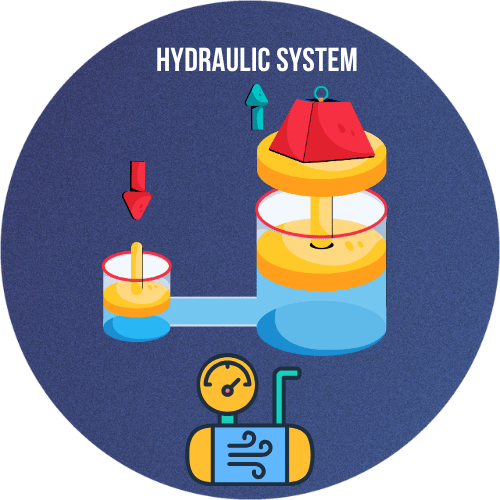 HYDRAULIC SYSTEM
  HYDRAULIC SYMBOLS
  HYDRAULIC STANDARDS
  HYDRAULIC CALCULATORS
  HYDRAULIC TOOLS
  BUYER’S GUIDES