
 HYDRAULIC BASICS
  HYDRAULIC COMPONENTS
  HYDRAULIC SYSTEM
  HYDRAULIC SYMBOLS
  HYDRAULIC STANDARDS
  HYDRAULIC CALCULATORS
  HYDRAULIC TOOLS
  BUYER’S GUIDES
Hydraulic systems are the unseen driving force behind a vast range of modern machinery—from construction excavators and aircraft landing gear to manufacturing presses and automotive braking systems. These systems rely on the power of pressurized fluid to perform precise, powerful, and controlled movements that mechanical linkages or electric systems alone cannot easily achieve. But how do they work so efficiently and reliably? The answer lies in understanding the hydraulic system working principle.
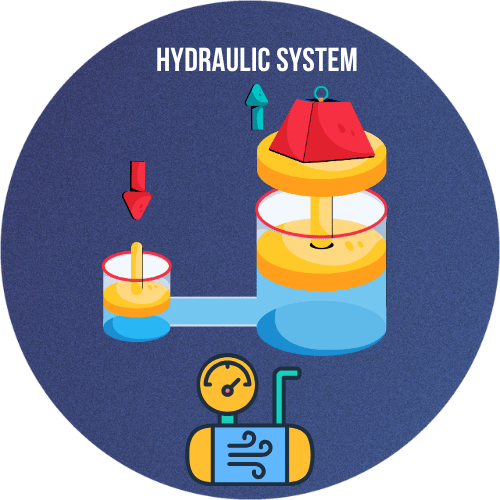
At the heart of every hydraulic system is a simple concept derived from fluid mechanics: the use of incompressible fluid to transmit and multiply force. This principle enables small mechanical inputs to generate large amounts of output force, making hydraulic systems extremely efficient for heavy-duty applications. The entire system operates under Pascal’s Law, which states that pressure applied to a confined fluid is transmitted equally in all directions. This foundational theory is central to how force is distributed and controlled within hydraulic circuits.
As industries demand higher precision, faster performance, and safer operation, the importance of knowing the hydraulic system working principle becomes more critical than ever. Engineers, technicians, and students alike must grasp this concept to troubleshoot issues, design effective systems, and innovate for future efficiency gains.
This comprehensive guide will break down how hydraulic systems work, from the behavior of fluid under pressure to the functions of pumps, valves, actuators, and reservoirs. We’ll explore the different types of hydraulic systems, how components interact to create motion, and why hydraulic power continues to be the backbone of many industrial and mobile applications.
Whether you’re new to fluid power or seeking a deeper understanding, this article offers a complete look at the hydraulic system working principle, how it’s applied in real-world machines, and why it remains a cornerstone of modern engineering.


